


BitViraj Technologies - Your Gateway to
Tomorrow's Innovations
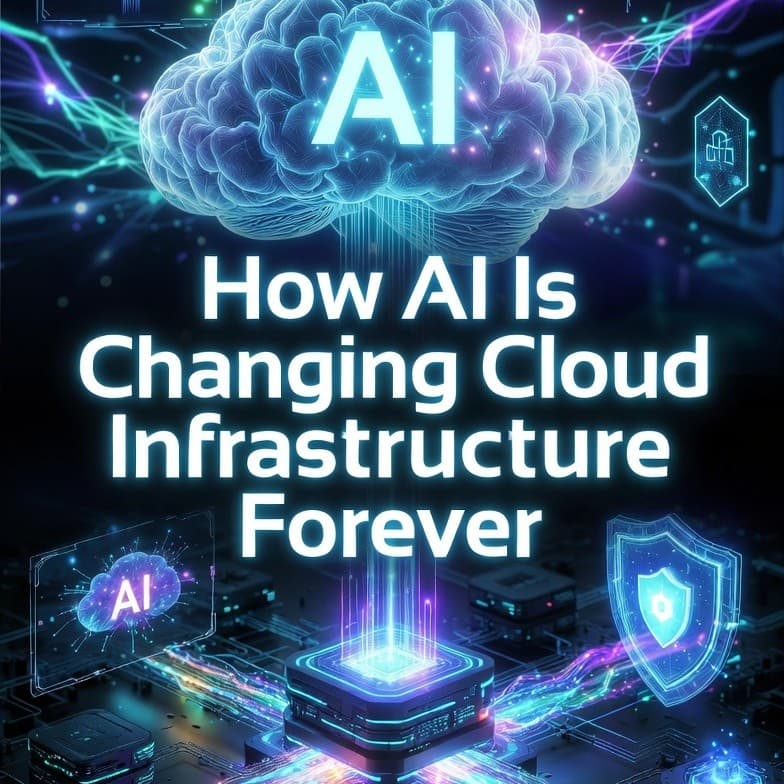
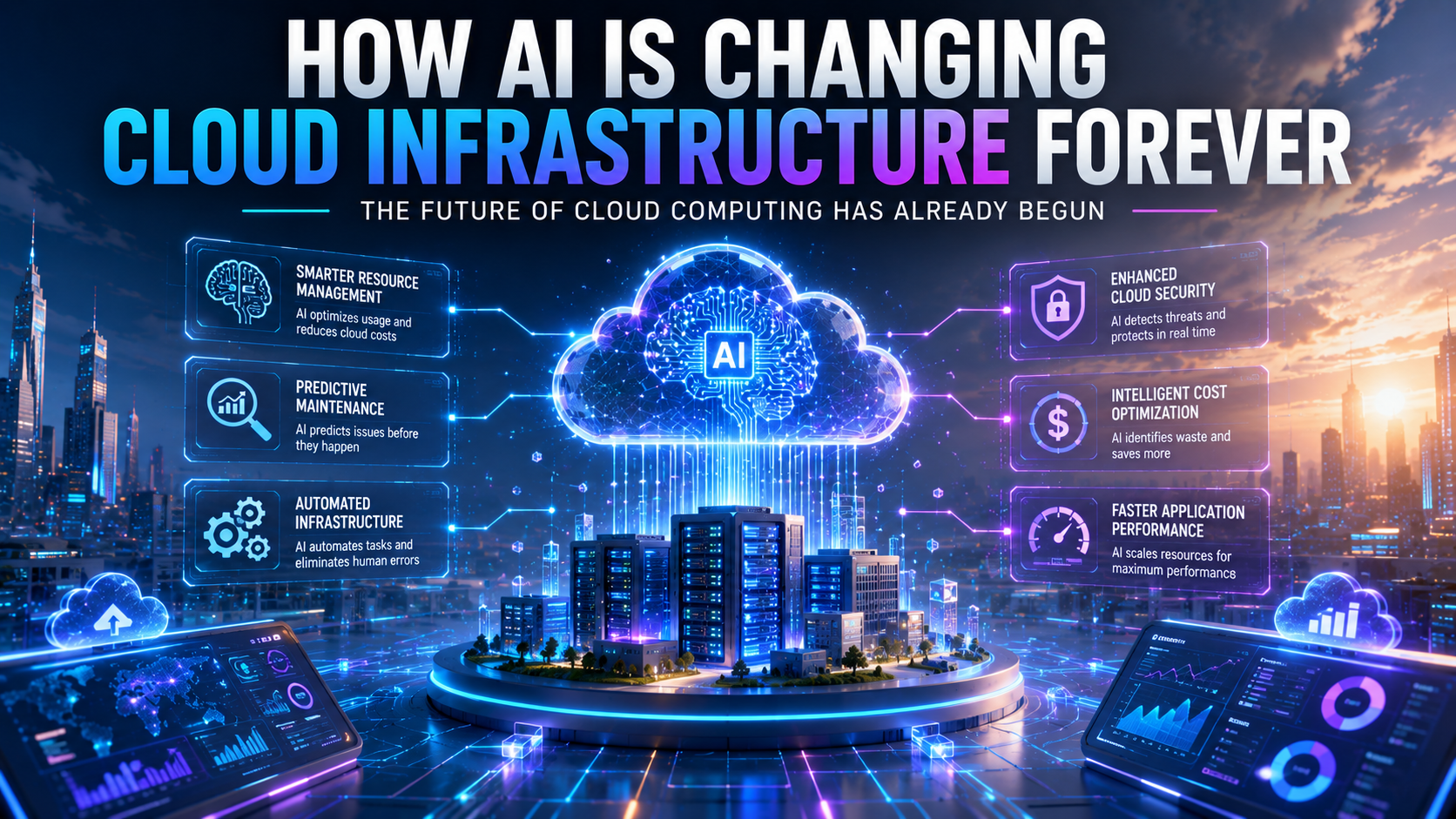
How AI Is Changing Cloud Infrastructure Forever
The Future of Cloud Computing Has Already Begun
Introduction
Cloud computing has transformed how businesses store data, build applications, and deliver digital services. But today, another technological revolution is taking place—Artificial Intelligence (AI). Together, AI and cloud computing are reshaping the way organizations manage infrastructure, improve efficiency, and drive innovation.
At Bitviraj Technology, we believe the combination of AI and cloud infrastructure is no longer a trend; it's becoming the foundation of modern digital transformation. Businesses that embrace this shift today will be better prepared for tomorrow's challenges.
In this article, we'll explore how AI is changing cloud infrastructure forever, why it matters, and what organizations should expect in the coming years.
Understanding Cloud Infrastructure
Before diving into AI's impact, let's understand what cloud infrastructure actually means.
Cloud infrastructure consists of the virtual resources that power cloud computing services, including:
- Virtual servers
- Storage systems
- Networking
- Databases
- Security services
- Computing power
Instead of maintaining expensive physical servers, businesses can access these resources on demand through cloud platforms, paying only for what they use.
The challenge, however, is that managing modern cloud environments has become increasingly complex. Large organizations may run thousands of virtual machines, applications, databases, and services simultaneously.
This is where Artificial Intelligence enters the picture.
Why AI Is a Game-Changer for Cloud Computing
Traditional cloud management relies heavily on human administrators who monitor systems, allocate resources, troubleshoot issues, and optimize performance.
As infrastructure grows, manual management becomes slower, more expensive, and more prone to errors.
AI changes this by making cloud infrastructure intelligent.
Rather than waiting for humans to react, AI can predict problems before they occur, automate repetitive tasks, optimize resource allocation, and continuously improve performance.
In many ways, AI is turning cloud infrastructure into a self-managing ecosystem.
1. Smarter Resource Management
One of the biggest challenges in cloud computing is resource utilization.
Companies often pay for computing resources they don't actually use.
Others underestimate demand and experience slow applications during traffic spikes.
AI analyzes historical usage patterns and predicts future demand with remarkable accuracy.
Instead of relying on fixed resource allocation, AI dynamically adjusts:
- CPU usage
- Memory
- Storage
- Network bandwidth
- Virtual machines
This ensures businesses only consume what they need while maintaining excellent performance.
The result?
Lower operational costs and better customer experiences.
2. Predictive Maintenance Reduces Downtime
Downtime can cost businesses thousands—or even millions—of dollars.
Traditional monitoring tools alert administrators only after something goes wrong.
AI changes the approach completely.
Machine learning models continuously analyze:
- Server performance
- Network traffic
- Hardware health
- System logs
- Application behavior
Instead of reacting to failures, AI predicts them before they happen.
For example, if a storage device begins showing unusual patterns, AI can recommend replacing it before it fails.
This proactive approach dramatically improves system reliability.
3. Automated Infrastructure Management
Cloud administrators spend countless hours performing repetitive tasks, including:
- Provisioning servers
- Managing updates
- Configuring storage
- Monitoring applications
- Scaling services
AI-powered automation handles many of these responsibilities without constant human intervention.
This allows IT teams to focus on innovation instead of routine maintenance.
Automation also reduces human error, one of the leading causes of cloud outages.
4. Enhanced Cloud Security
Cybersecurity threats continue to evolve every year.
Traditional security systems depend on predefined rules.
Unfortunately, attackers constantly develop new techniques that bypass those rules.
AI introduces intelligent security monitoring.
It learns what "normal" activity looks like within an organization.
Whenever unusual behavior appears, AI immediately investigates and responds.
Examples include:
- Unauthorized login attempts
- Suspicious network traffic
- Malware detection
- Data exfiltration attempts
- Insider threats
AI significantly shortens the time between threat detection and response.
In today's cybersecurity landscape, speed is everything.
5. Intelligent Cost Optimization
Cloud bills can quickly become overwhelming.
Unused virtual machines...
Idle databases...
Oversized storage...
All contribute to unnecessary spending.
AI continuously analyzes cloud usage to identify waste.
It recommends:
- Removing unused resources
- Selecting better pricing plans
- Optimizing storage
- Scheduling workloads efficiently
Many organizations save thousands of dollars annually simply by allowing AI to optimize cloud spending.
6. Faster Application Performance
Users expect websites and applications to load instantly.
Even a few seconds of delay can reduce customer satisfaction and impact revenue.
AI monitors application performance in real time.
When demand increases, it automatically scales infrastructure.
When traffic decreases, resources scale back down.
This creates faster applications while avoiding unnecessary cloud expenses.
Customers enjoy a smoother digital experience without businesses constantly monitoring performance manually.
7. AI-Powered Disaster Recovery
Every business should prepare for unexpected disruptions.
Natural disasters...
Cyberattacks...
Hardware failures...
Power outages...
AI enhances disaster recovery by identifying critical workloads, prioritizing backups, and automating failover processes.
Instead of waiting for engineers to manually restore systems, AI can immediately shift workloads to healthy cloud environments.
Recovery becomes faster, reducing both downtime and financial loss.
8. Better Data Analytics
Cloud platforms generate enormous amounts of operational data every second.
Without AI, much of this information remains unused.
AI processes millions of data points rapidly and uncovers valuable insights.
Businesses can understand:
- Customer behavior
- Infrastructure trends
- Performance bottlenecks
- Capacity planning
- Future resource requirements
These insights help organizations make smarter strategic decisions.
9. Self-Healing Cloud Systems
One of the most exciting developments is self-healing infrastructure.
Imagine a cloud environment that detects problems, diagnoses the cause, and fixes itself—all without human involvement.
AI makes this increasingly possible.
Examples include:
- Restarting failed services
- Replacing unhealthy servers
- Reconfiguring network routes
- Recovering failed applications
- Balancing workloads automatically
This dramatically improves system resilience.
Industries Benefiting from AI-Powered Cloud Infrastructure
Almost every industry is embracing intelligent cloud technologies.
Healthcare
Hospitals use AI-powered cloud systems for patient data management, predictive diagnostics, and secure medical record storage.
Banking and Finance
Financial institutions rely on AI for fraud detection, risk analysis, and real-time transaction monitoring.
Retail
Retail businesses optimize inventory, personalize customer experiences, and forecast demand using AI-driven cloud platforms.
Manufacturing
Factories use AI to monitor equipment, predict maintenance needs, and optimize production schedules.
Education
Educational institutions use cloud-based AI for personalized learning, virtual classrooms, and automated administrative tasks.
Challenges to Consider
While AI brings incredible advantages, businesses should also be aware of potential challenges.
Data privacy concerns
AI implementation costs
Skills shortages
Integration with legacy systems
Regulatory compliance
The key is adopting AI strategically rather than trying to automate everything at once.
Organizations should focus on high-impact use cases first before expanding AI across their infrastructure.
The Future of AI in Cloud Infrastructure
The next decade will likely see cloud infrastructure become increasingly autonomous.
Future developments may include:
- Fully self-managing cloud environments
- AI-driven cybersecurity defenses
- Autonomous resource allocation
- Intelligent software deployment
- Advanced predictive analytics
- Near-zero downtime systems
As AI models become more sophisticated, cloud platforms will continue evolving from simple hosting environments into intelligent digital ecosystems.
Businesses that adapt early will gain significant competitive advantages in efficiency, scalability, and innovation.
Final Thoughts
Artificial Intelligence is fundamentally transforming cloud infrastructure in ways that were unimaginable just a few years ago.
From automated management and predictive maintenance to enhanced security and intelligent cost optimization, AI is helping businesses build faster, smarter, and more resilient cloud environments.
Organizations no longer need to view cloud infrastructure as something that simply stores data or hosts applications. Instead, it is becoming an intelligent platform capable of learning, adapting, and continuously improving itself.
At Bitviraj Technology, we help businesses harness the power of AI and cloud computing to create future-ready digital solutions. Whether you're planning a cloud migration, optimizing your existing infrastructure, or exploring AI-driven automation, investing in intelligent cloud technologies today will prepare your business for the opportunities of tomorrow.
The future of cloud computing isn't just about more servers or bigger data centers—it's about smarter infrastructure powered by AI. And that future has already arrived.
Case Studies
Empowering Digital
Evolution



Blogs
Empowering Digital
Evolution
BitViraj Technologies - Your Gateway to
Tomorrow's Innovations




Embark on a DigitalJourney


The next-generation digital technology company Bitviraj has the potential to empower and reinvent business in the current fast-paced market.


Our Service
- Website Development
- Application Development
- Blockchain Development
- Gaming and Metaverse