

BitViraj Technologies - Your Gateway to
Tomorrow's Innovations
The Tokenization of Indian Real Estate: A Comprehensive Guide to REITs, SM-REITs, and the Future of Fractional Ownership
For generations, Indian real estate has represented the ultimate store of value—a tangible asset passed down through families, a hedge against inflation, and the cornerstone of wealth creation. Yet paradoxically, it has remained the most inaccessible asset class for the average Indian.

By Bitviraj Technology
May 1, 2024
The Tokenization of Indian Real Estate
A Comprehensive Guide to REITs, SM-REITs, and the Future of Fractional Ownership
The Tokenization of Indian Real Estate: A Comprehensive Guide to REITs, SM-REITs, and the Future of Fractional Ownership
Introduction: The Democratization of India's Most Prized Asset Class
For generations, Indian real estate has represented the ultimate store of value—a tangible asset passed down through families, a hedge against inflation, and the cornerstone of wealth creation. Yet paradoxically, it has remained the most inaccessible asset class for the average Indian. A prime commercial property in Mumbai's Bandra-Kurla Complex or a residential tower in Gurugram requires crores of rupees, effectively limiting participation to the ultra-wealthy, family offices, and institutional investors.
This paradigm is undergoing its most significant transformation since the introduction of the Real Estate (Regulation and Development) Act (RERA) in 2016. The convergence of two powerful forces—regulatory innovation from SEBI and blockchain-based tokenization technology—is dismantling the barriers that have kept real estate locked away from the masses.
This comprehensive guide explores how Real Estate Investment Trusts (REITs), Small and Medium REITs (SM-REITs), and blockchain tokenization are converging to create a new asset class: digital, fractional, and tradable real estate in India.
Part I: The Foundations – Understanding REITs and SM-REITs
1.1 The Evolution of Real Estate Investment Vehicles in India
Before diving into tokenization, we must understand the regulatory containers that make fractional ownership legally possible in India.
Traditional REITs (2014 Framework)
The Securities and Exchange Board of India (SEBI) introduced REIT regulations in 2014, amended significantly in 2023 and 2025, to create a vehicle that would allow retail participation in income-generating commercial real estate.
Key Parameters:
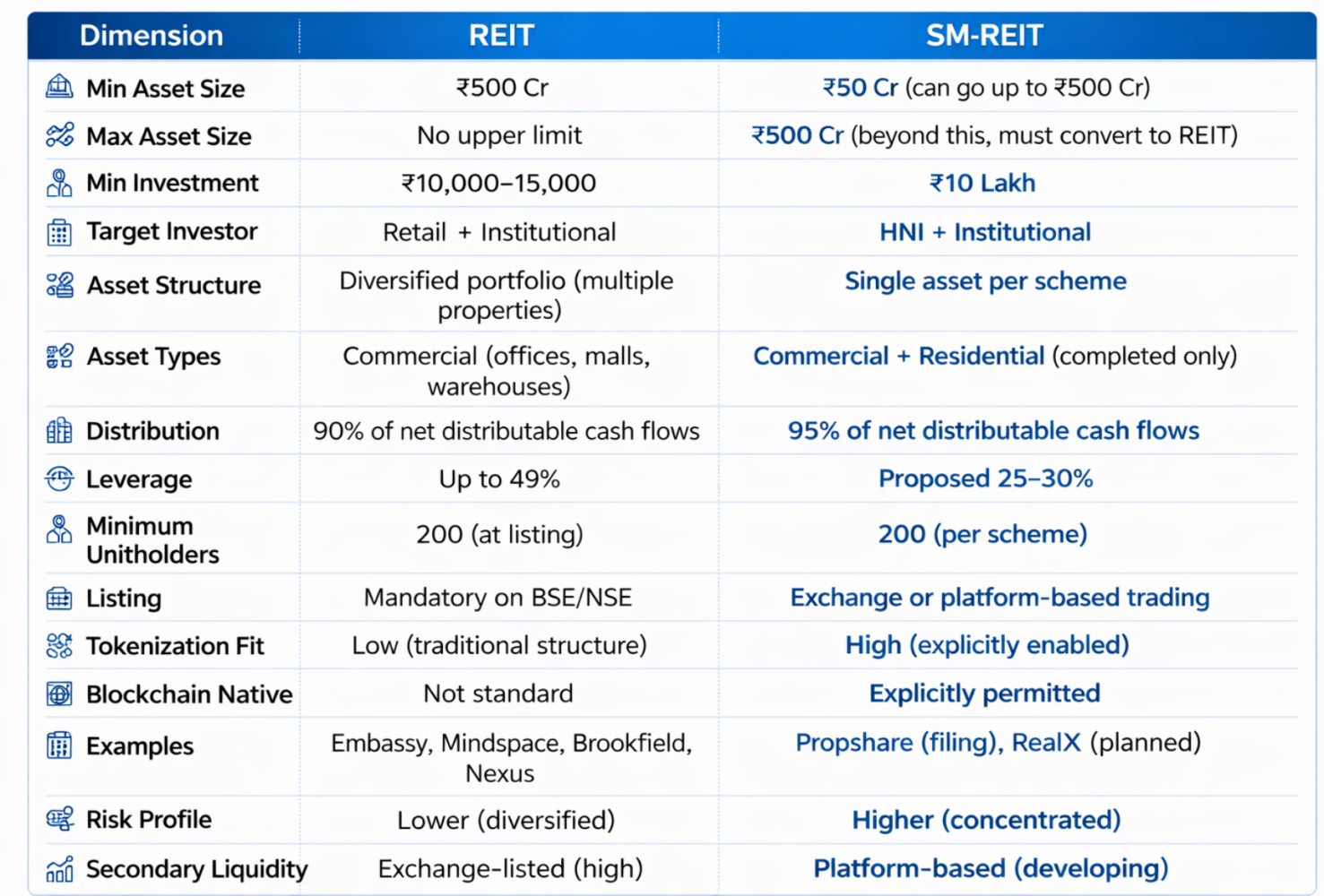
- Minimum Asset Size: ₹500 crore
- Minimum Investment: ₹10,000–15,000 per unit
- Distribution Requirement: 90%+ of net distributable cash flows
- Leverage Limit: Up to 49% of asset value
- Listing: Mandatory on BSE or NSE
- Eligible Assets: Primarily commercial real estate
Examples in India:
- Embassy Office Parks REIT
- Mindspace Business Parks REIT
- Brookfield India Real Estate Trust
- Nexus Select Trust (retail-focused)
The Limitation: While REITs democratized access to commercial real estate, they remained focused on institutional-grade, large-scale assets. The ₹500 crore floor meant thousands of mid-sized properties remained outside this framework.
The SM-REIT Revolution (2024 Framework)
In March 2024, SEBI notified the SM-REIT Regulations, specifically designed to regulate fractional ownership platforms. This framework was further refined through amendments in 2024 and 2025.
Key Parameters:
- Asset Size Range: ₹50 crore to ₹500 crore
- Structure: Each property = separate "investment scheme"
- Minimum Investment: ₹10 lakh per investor
- Minimum Unitholders: 200 per scheme
- Distribution Requirement: 95% of net distributable cash flows
- Asset Composition: 95%+ in completed, revenue-generating properties
- Blockchain Enablement: Explicitly permits tokenization
The Game-Changer:
For the first time, an Indian regulatory framework explicitly acknowledged and enabled blockchain-based tokenization as a legitimate mechanism for representing and transferring ownership.
1.2 Why SM-REITs Are the Perfect Vehicle for Tokenization
- Scheme-Based Structure: Each property is a separate legal entity, allowing asset-specific tokens with distinct risk-return profiles.
- Regulatory Oversight: SEBI registration and compliance provide the trust layer institutional investors require.
- Completed Asset Mandate: 95%+ in completed, rent-generating properties eliminates construction risk.
- Distribution Mandate: 95% cash distribution ensures regular income for token holders.
- Explicit Blockchain Enablement: SEBI's forward-looking approach created rare global regulatory clarity.
Part II: The Technology – How Tokenization Works
2.1 What Is Real Estate Tokenization?
Real estate tokenization is the process of converting rights to a property (or rights to income from a property) into digital tokens on a blockchain. Each token represents fractional ownership in the Special Purpose Vehicle (SPV) that holds the legal title to the property.
Critical Distinction: Tokens do not represent direct ownership of the land (which would require compliance with the Registration Act, 1908). Instead, they represent economic rights in the SPV—the right to rental income, capital appreciation, and voting on major decisions.
2.2 The Three-Layer Architecture
A robust tokenization platform operates across three integrated layers:
Layer 1: Legal/Regulatory Layer (Off-Chain)
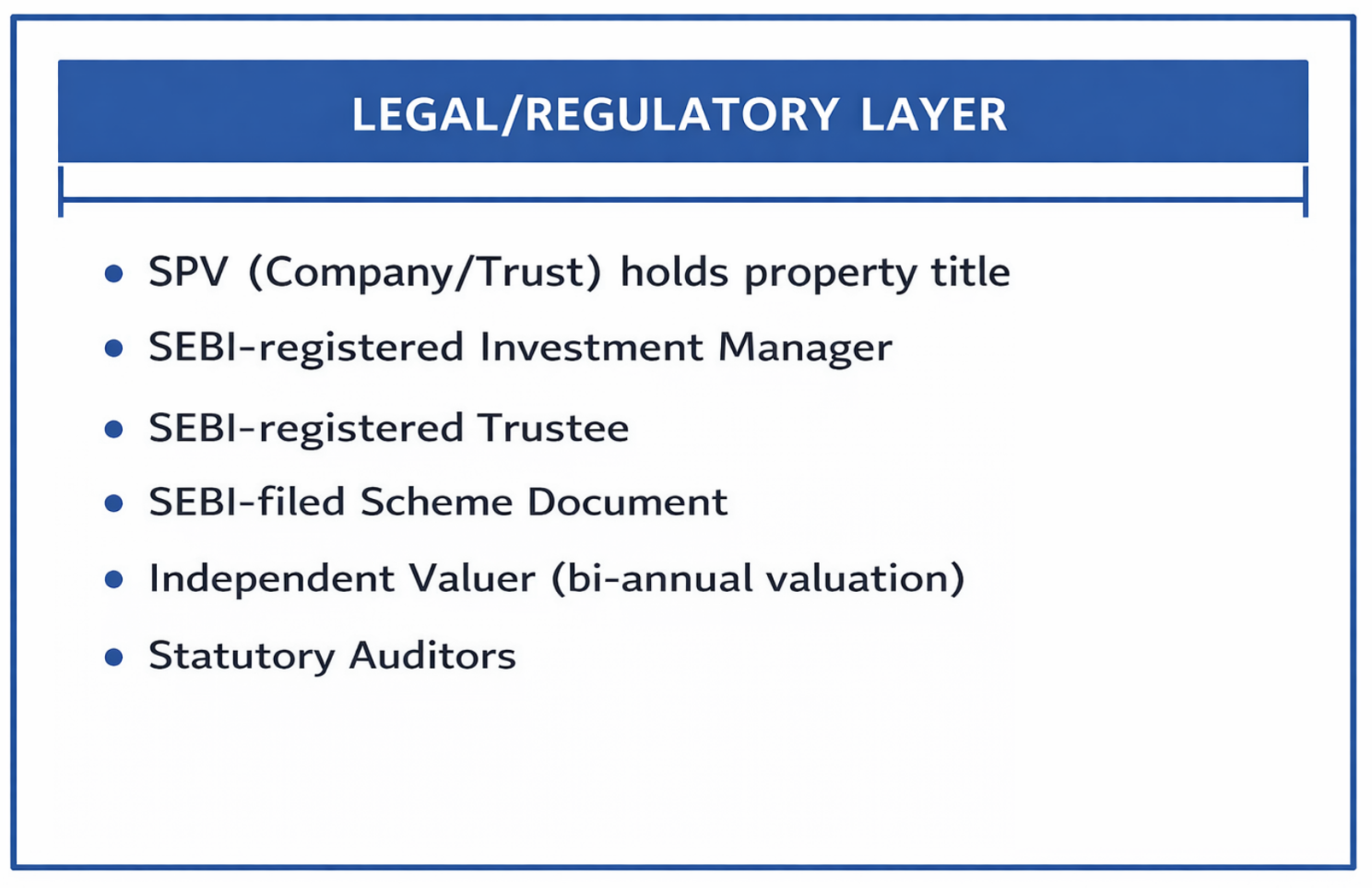
Components: SPV, Investment Manager, Trustee, Scheme Document.
Layer 2: Tokenization Engine (On-Chain)
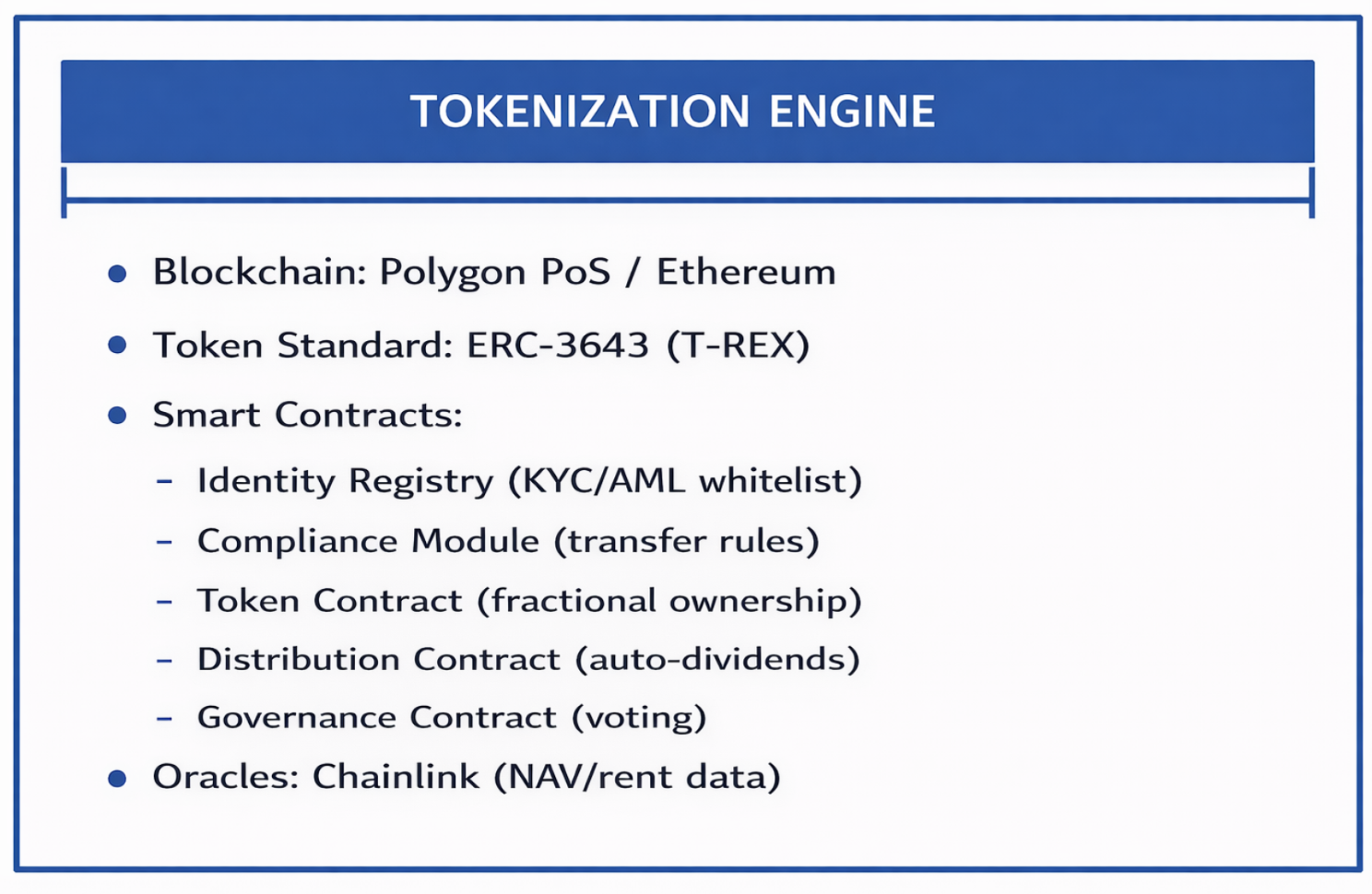
ERC-3643 (T-REX) on Polygon PoS. Why? Low transaction costs, EVM compatibility, speed, Indian developer community.
Layer 3: Investor Interface (Application Layer)
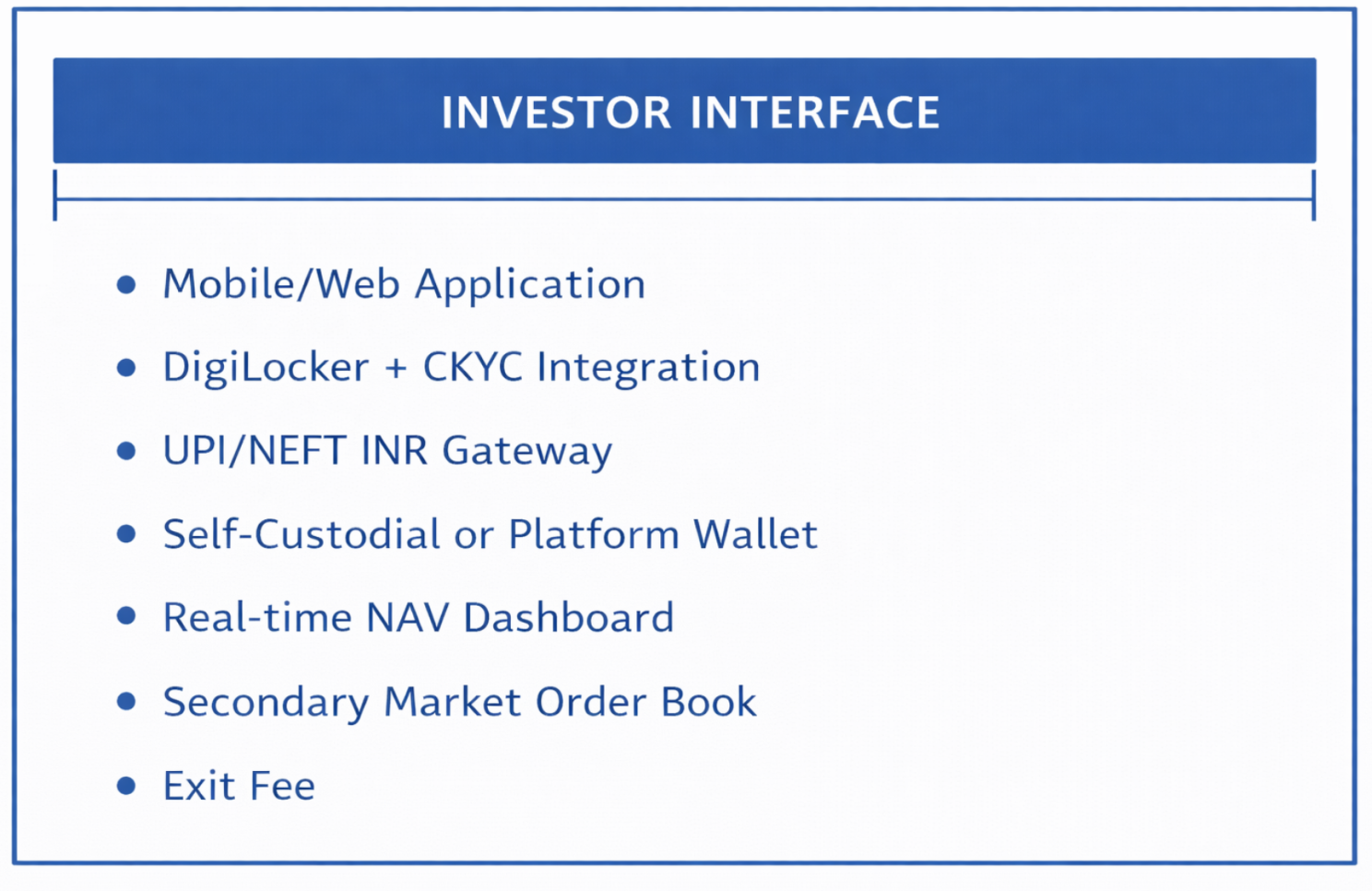
Components: Onboarding, Payment Integration, Wallet Management, Dashboard.
2.3 The Token Lifecycle: From Asset to Exit
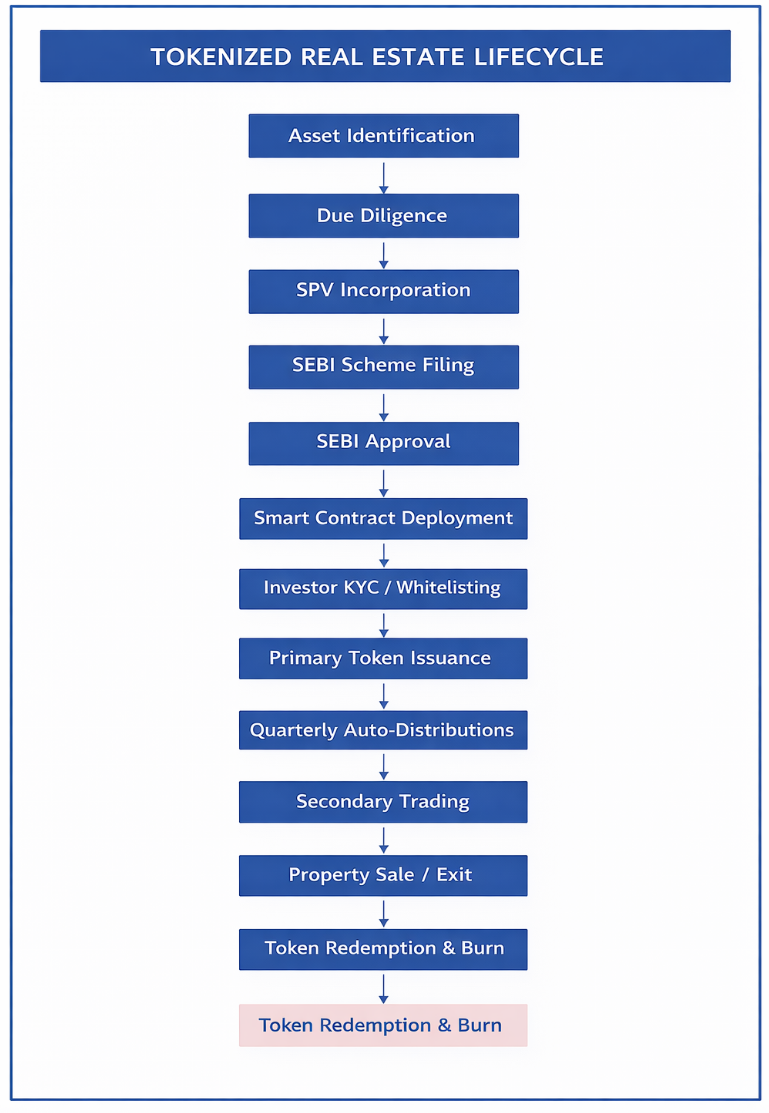
- Asset Identification: Investment Manager identifies suitable property.
- Due Diligence: Legal, technical, financial due diligence.
- SPV Incorporation: SPV created to hold the property.
- SEBI Scheme Filing: Offer document filed with SEBI.
- SEBI Approval: SEBI reviews and provides observations.
- Smart Contract Deployment: ERC-3643 contracts deployed.
- Investor KYC/Whitelisting: Investors complete eKYC.
- Primary Token Issuance: Tokens minted and transferred.
- Quarterly Auto-Distributions: Rental income distributed automatically.
- Secondary Trading: Tokens traded on SEBI-approved platforms.
- Property Sale/Exit: Property sold, proceeds distributed.
- Token Redemption & Burn: Tokens redeemed and destroyed.
Part III: The Business Model – Economics of Tokenization
3.1 Platform Revenue Streams
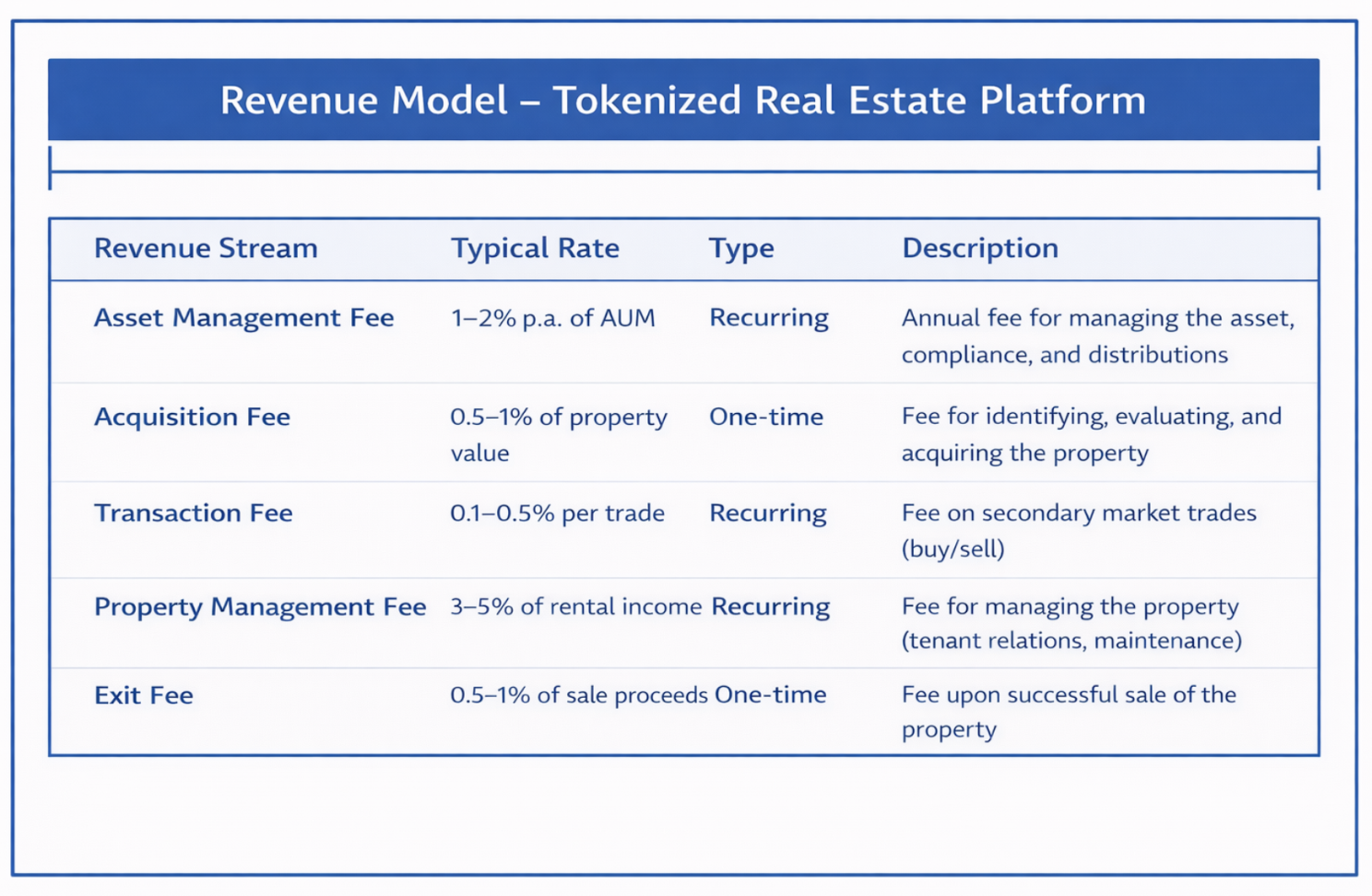
Note: All fees are fully disclosed in the scheme document and approved by the Trustee.
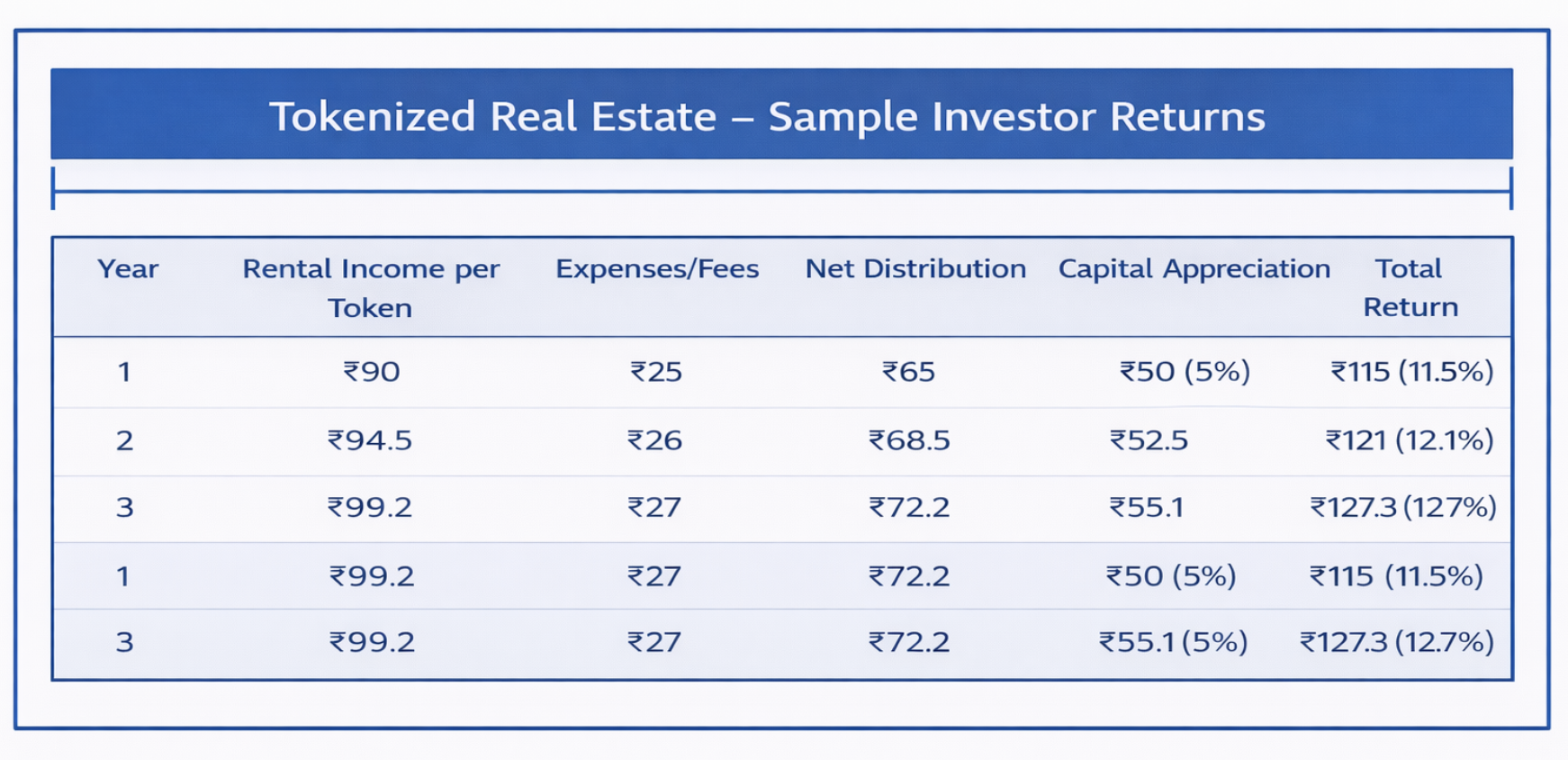
3.2 Investor Returns Model
For a typical Grade A commercial asset, the return structure looks like this:
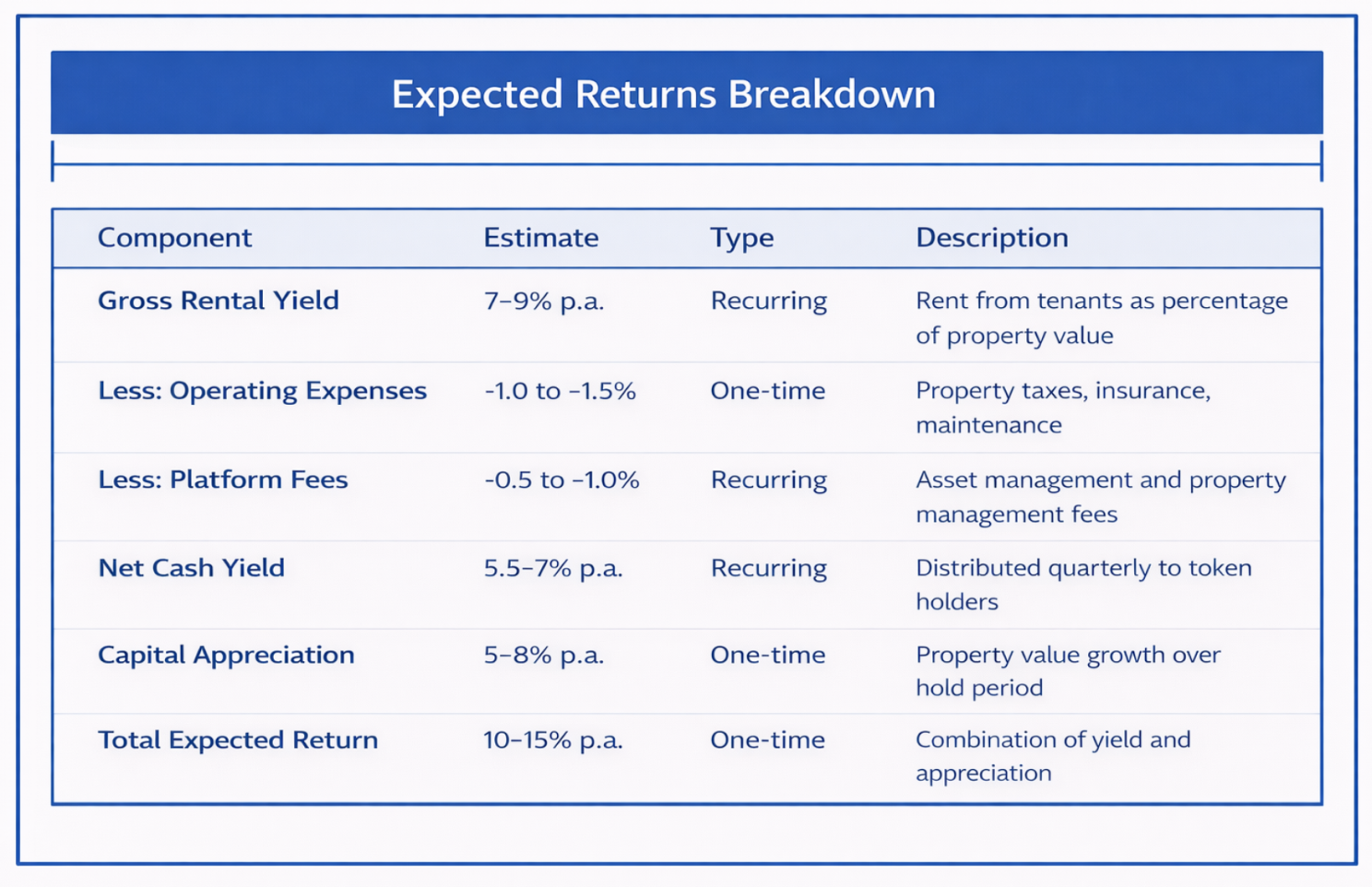
Example Calculation (₹1,000 token):
3.3 Market Potential
According to CBRE estimates, India has over 30 crore square feet of Grade A commercial stock potentially eligible for SM-REIT structures, representing a market opportunity of approximately ₹5 lakh crore by 2026.
MMR
30% of eligible stock
Bengaluru
25% of eligible stock
Delhi-NCR
20% of eligible stock
Part IV: The Compliance Framework – Navigating India's Regulatory Landscape
4.1 Multi-Regulatory Map
4.2 The KYC/AML Pipeline
- Identity Verification: PAN, Aadhaar eKYC via DigiLocker
- Video KYC: RBI-compliant live agent interaction
- CKYC Registration: Central KYC registry upload
- Risk Profiling: Investor categorization
- Wallet Whitelisting: Address added to ERC-3643 Identity Registry
- Ongoing Monitoring: Transaction pattern analysis
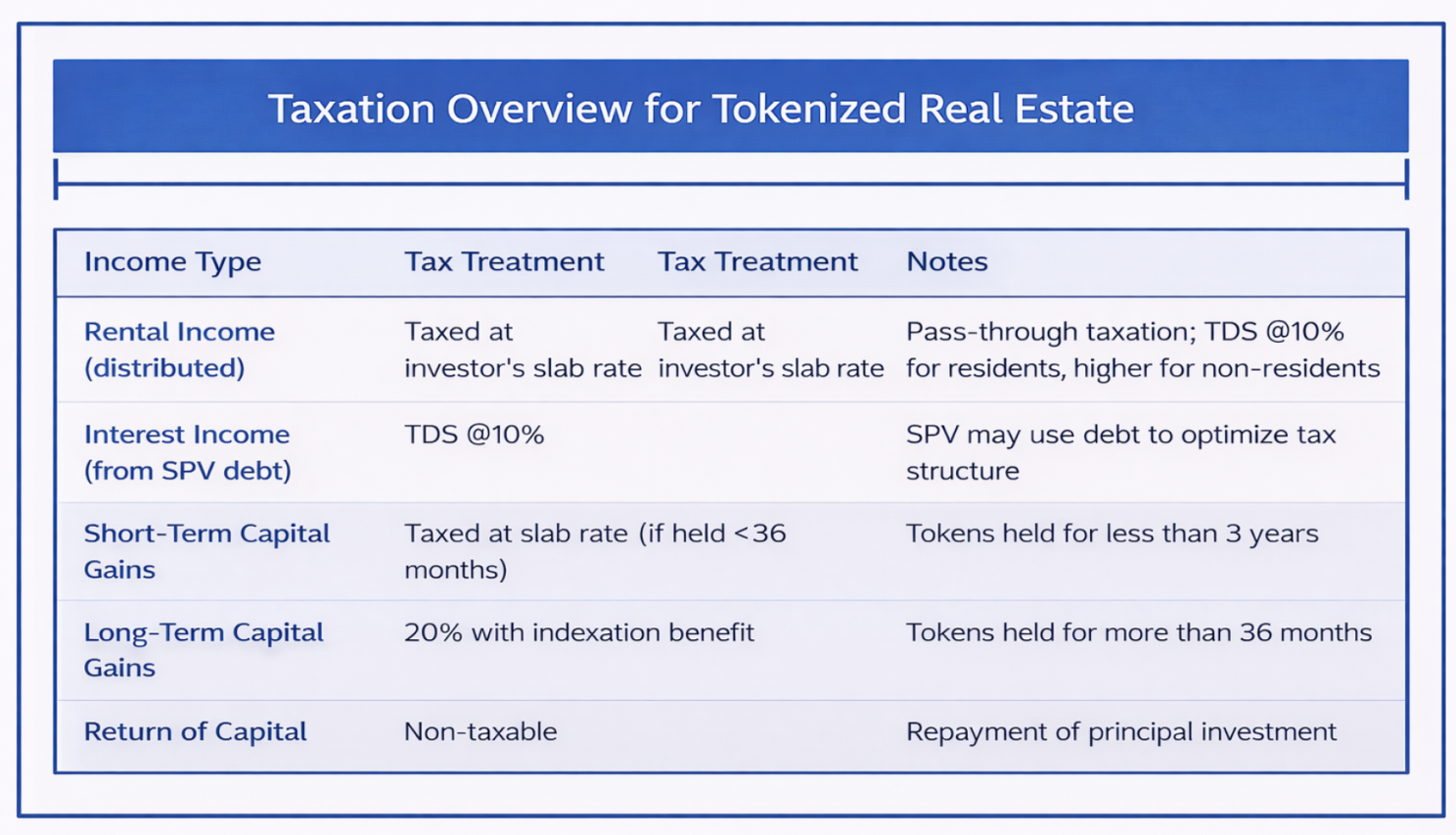
4.3 Tax Treatment
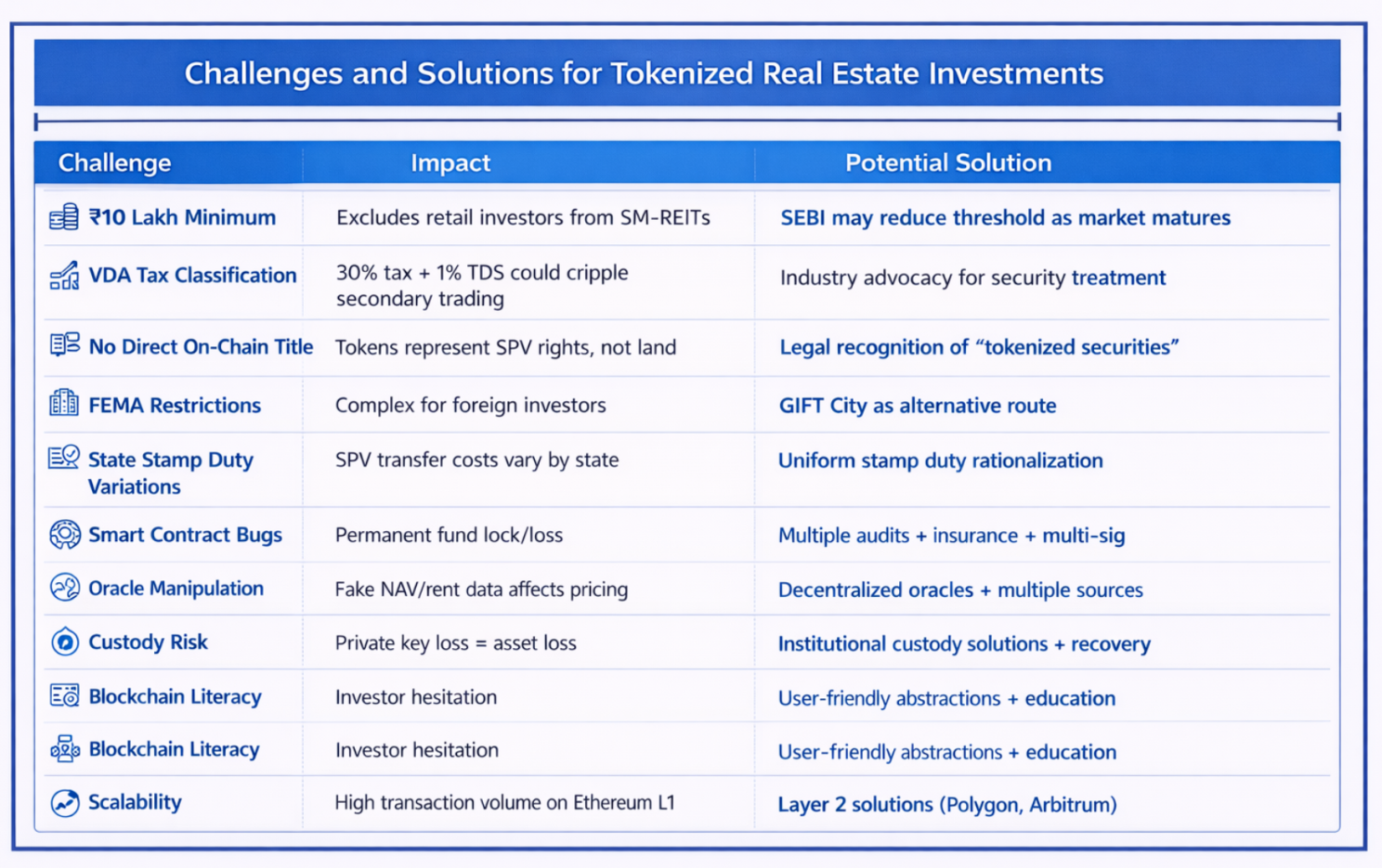
The tax treatment of tokenized SM-REIT units is evolving. If tokens are treated as "Virtual Digital Assets" (VDAs), transfers could attract 30% tax on gains and 1% TDS. Industry is engaging with CBDT for classification as securities, not VDAs.
4.4 The CIS Trap and Why SM-REITs Are Essential
Prior to SM-REIT regulations, fractional ownership platforms operated in a regulatory grey area. Under Section 11AA of the SEBI Act, any arrangement where funds are pooled for a common purpose with returns dependent on promoter efforts is deemed a Collective Investment Scheme (CIS), requiring SEBI registration.
The SM-REIT framework provides the only legal safe harbor for fractional real estate offerings, bringing them within the regulatory perimeter.
Part V: Use Cases – Tokenization in Action
Use Case 1: Propshare's Bengaluru SM-REIT (First Mover)
Propshare filed India's first SM-REIT scheme with SEBI in late 2024. Asset: Grade A commercial office in Outer Ring Road, Bengaluru. Target Raise: ₹353 crore. Minimum Investment: ₹10 lakh. Blockchain: Polygon PoS, ERC-3643.
Use Case 2: TechPark Alpha – A Hypothetical Pune IT Hub Tokenization
To understand the mechanics, let's walk through a detailed hypothetical use case.
The Asset:
- Name: TechPark Alpha
- Location: Hinjewadi IT Park, Pune
- Size: 250,000 sq. ft. Grade A office space
- Tenant: Fortune 500 IT company with 10-year lease (9 years remaining)
- Monthly Rent: ₹2.5 crore (net of operating expenses)
- Valuation: ₹120 crore (based on 6.25% cap rate)
- Target Raise: ₹96 crore (80% of value, 20% buffer/debt)
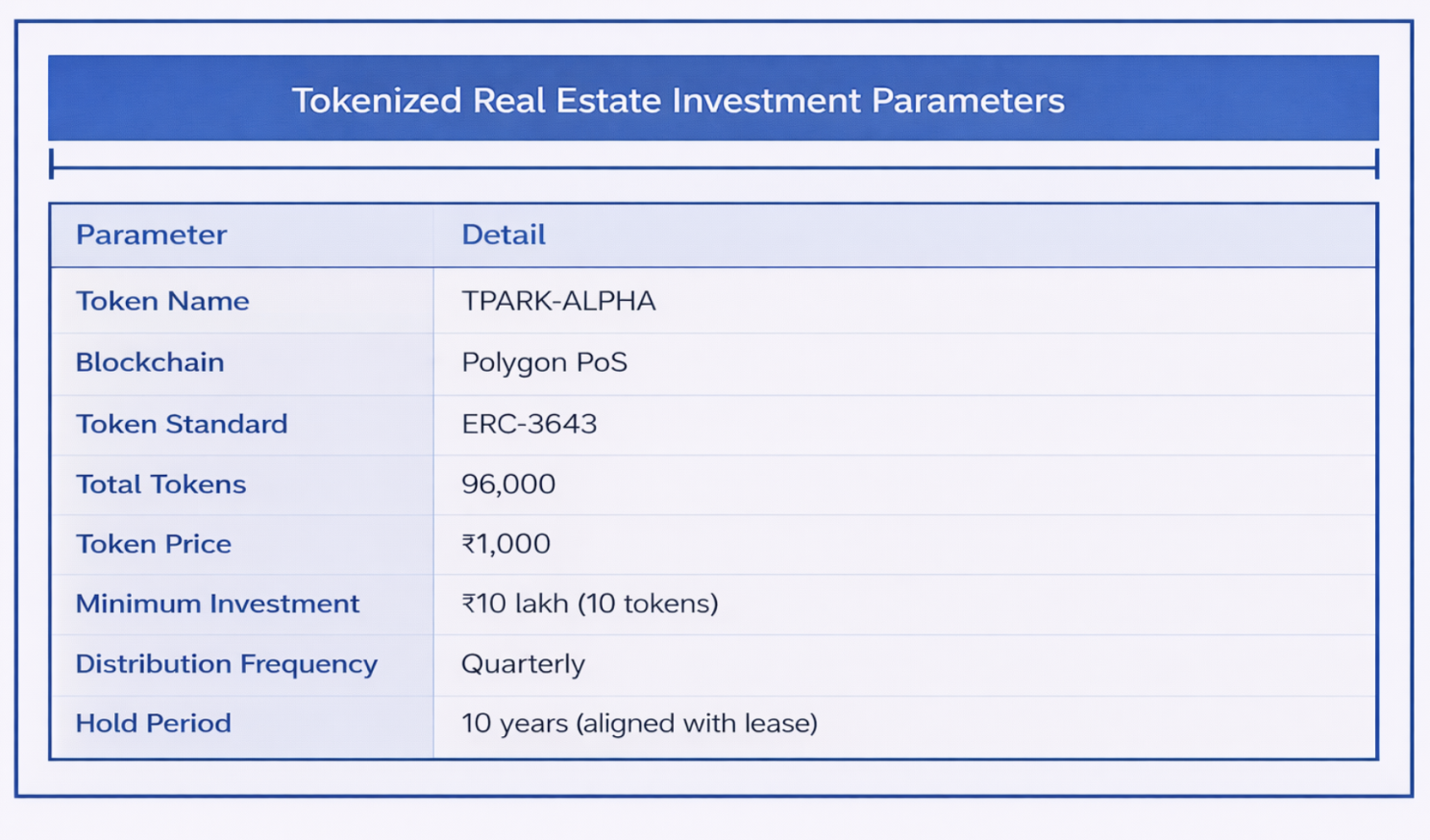
The Token Structure:
Financial Projections (per token):
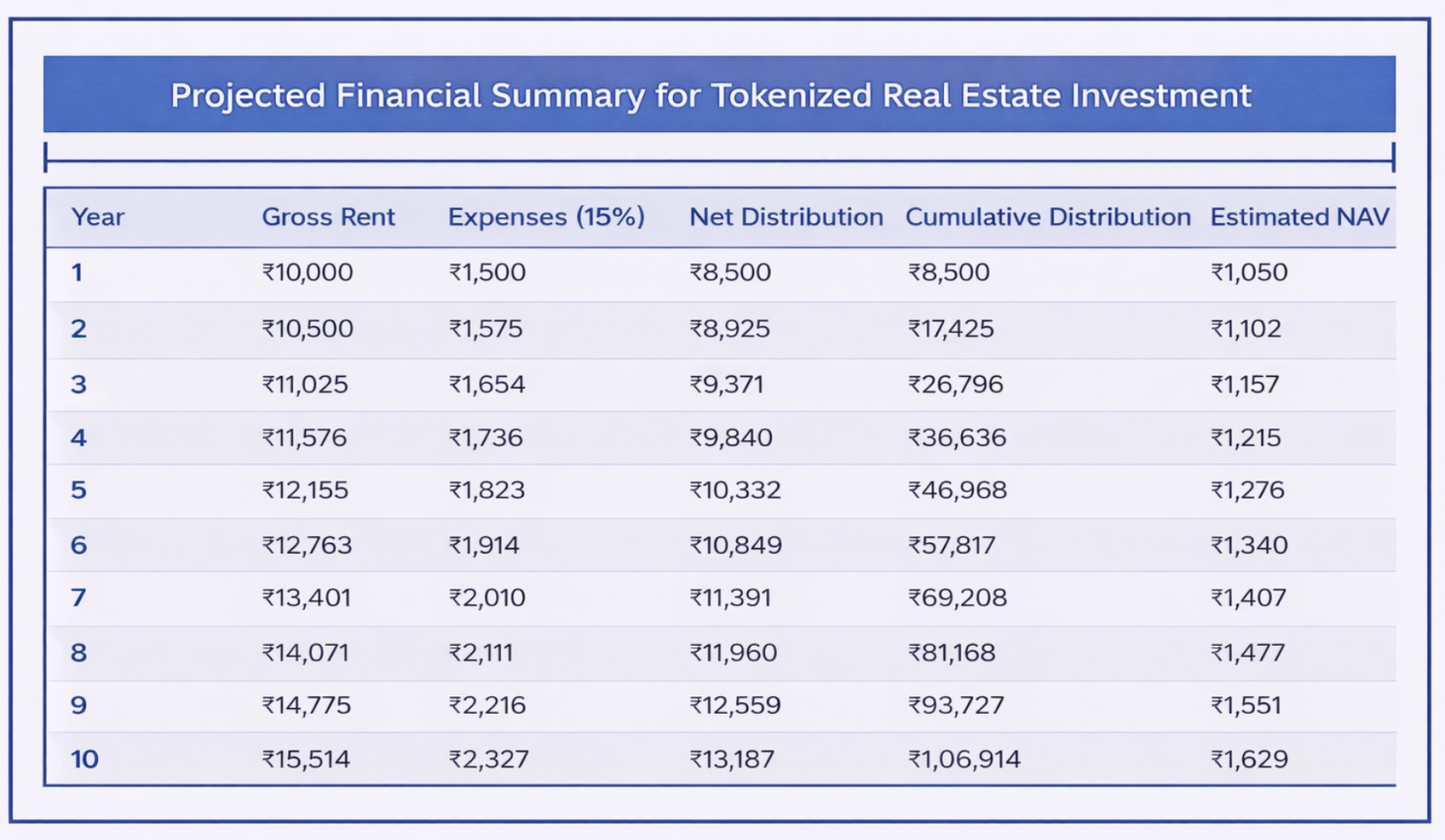
Assumptions: 5% annual rent escalation, property sale at 8% cap rate in Year 10 (₹162.9 Cr). Final distribution per token: ₹1,62,900 (sale proceeds) + ₹13,187 (final year rent) = ₹1,76,087.
Total Return per ₹1,000 Token (10-year hold):
- Total Distributions: ₹1,06,914
- Final Sale Proceeds: ₹1,62,900
- Total Received: ₹2,69,814
- Initial Investment: ₹1,00,000 (100 tokens)
- Total Return: 169.8%
- IRR: ~10.5% p.a.
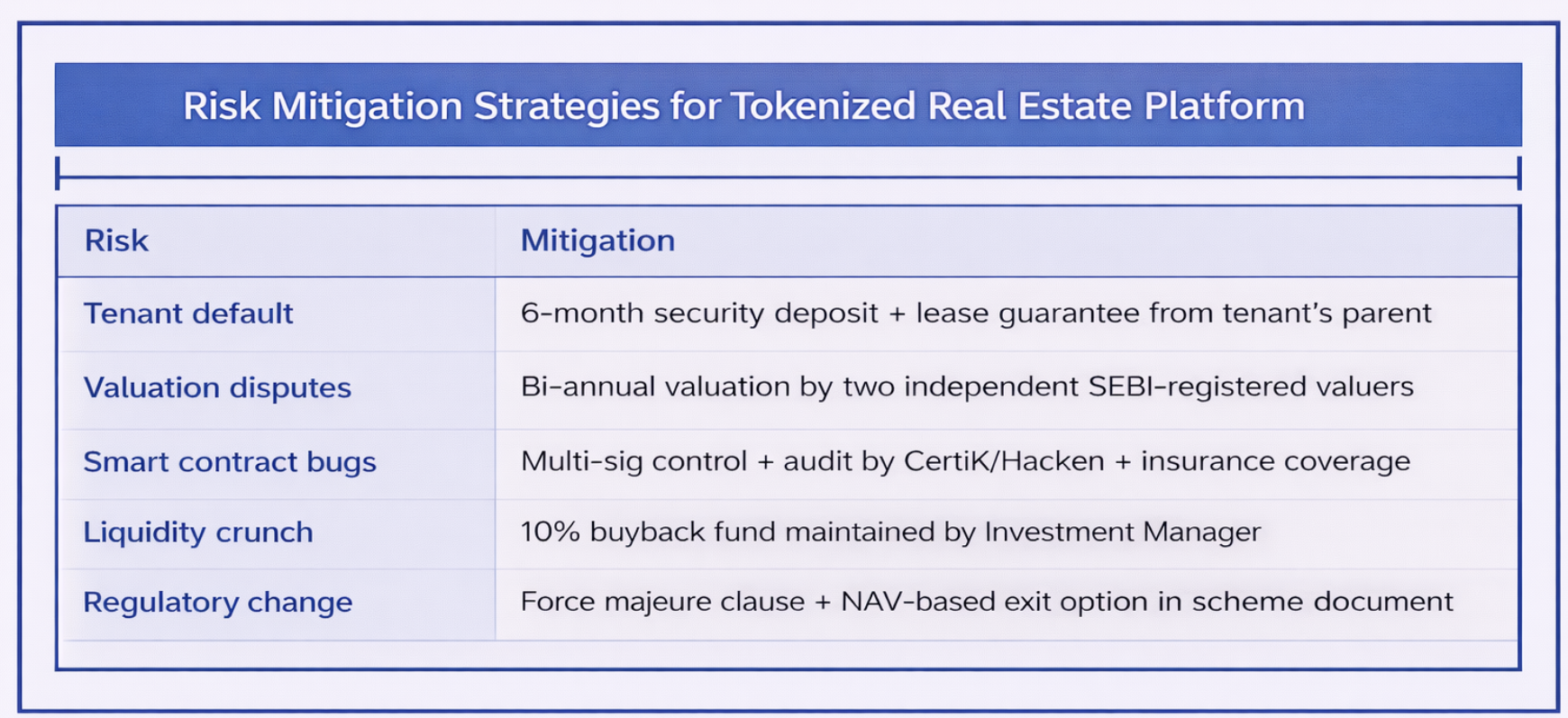
Risk Mitigation Measures:
Use Case 3: RealX and Polygon – Building the Infrastructure Layer
RealX is a pioneer in RWA tokenization in India, partnering with Polygon to build compliant tokenization infrastructure. The RealEstate.Exchange (REX) platform is building a regulated secondary market for tokenized real estate on Polygon PoS.
Use Case 4: GIFT City – The Cross-Border Hub
GIFT City (Gujarat International Finance Tec-City) operates as a distinct regulatory jurisdiction. IFSCA has established an Expert Committee on Asset Tokenization, and platforms like Terazo and Tokeny have been admitted to the sandbox. This could become the hub for cross-border tokenized real estate.
Part VI: REIT vs. SM-REIT – A Detailed Comparison
Part VII: Challenges and Limitations
7.1 Regulatory Challenges
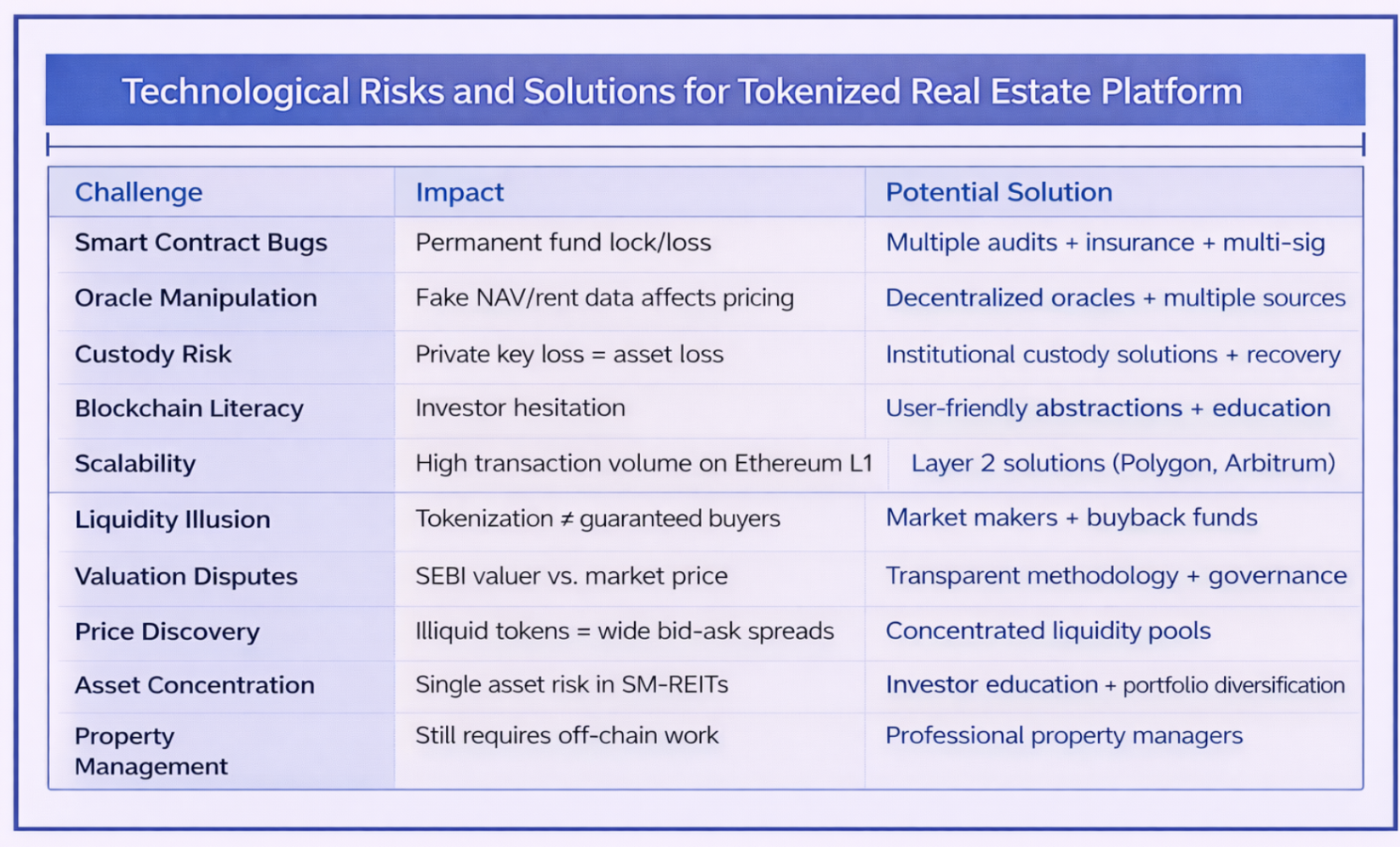
7.2 Technical Challenges
7.3 Market Challenges
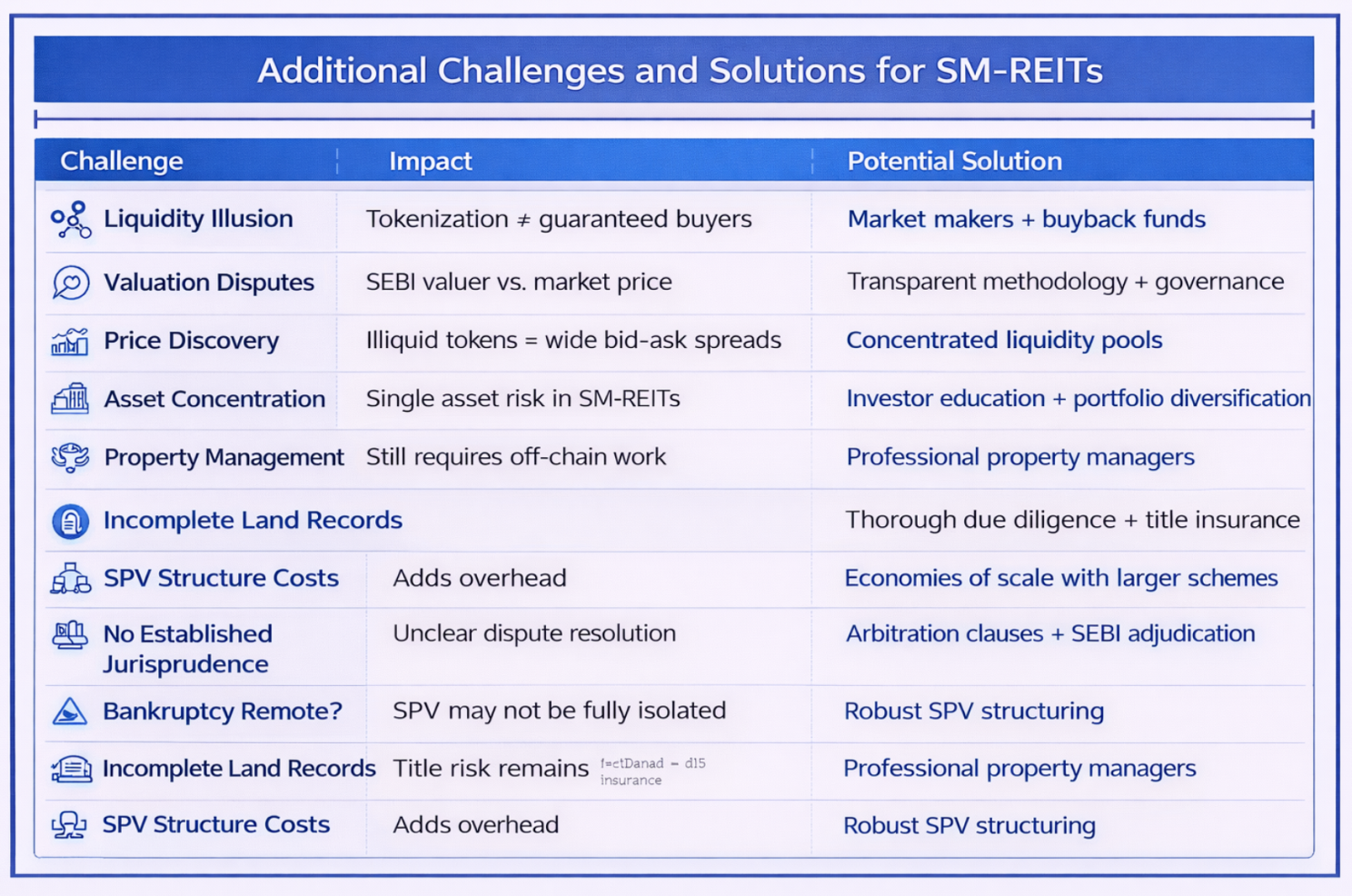
7.4 Legal Challenges
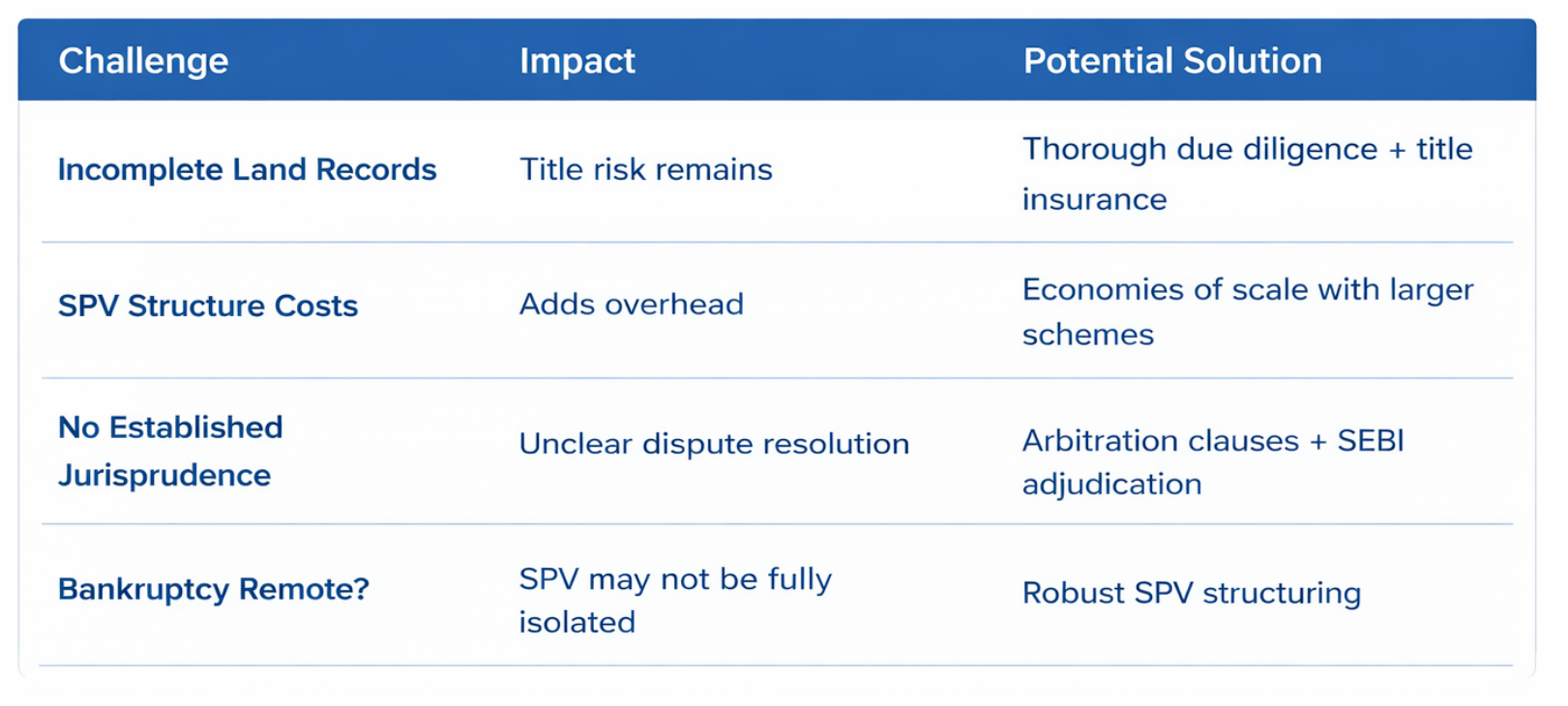
Part VIII: The Future Outlook – India as a Global Tokenization Hub
8.1 Near-Term Developments (2025-2026)
- First SM-REIT launches (Propshare Bengaluru scheme)
- Secondary market infrastructure (REX platform)
- Regulatory clarifications on token taxation
- Institutional participation from family offices
8.2 Medium-Term Developments (2027-2028)
- Retail participation with reduced minimums
- Asset class expansion (residential rentals, warehousing)
- Technology maturation (cross-chain bridges, AI valuation)
- India Stack integration
8.3 Long-Term Vision (2030 and Beyond)
- India as Asia's tokenization hub ($1-2 trillion market)
- Digital Rupee (e₹) integration
- Global investment flows via GIFT City
- Complete digital asset stack
Conclusion: The Convergence of Trust and Technology
Real estate tokenization in India represents a historic convergence of regulatory innovation (SM-REITs) and technological innovation (blockchain).
The result is a new asset class: regulated, yield-bearing, liquid, and accessible. For the first time, a professional in Pune can own a fraction of a Bengaluru office tower, receive quarterly rental income automatically, and trade that ownership when needed—all within a fully compliant regulatory framework.
By 2030, tokenized real estate could be as commonplace as mutual funds—a standard component of every diversified portfolio. India, with its unique combination of regulatory foresight, digital infrastructure, and blockchain innovation, is poised to lead this transformation globally.
The wall around Indian real estate is finally crumbling. And through the cracks, a new generation of investors is entering.
Case Studies
Empowering Digital
Evolution



Blogs
Empowering Digital
Evolution
BitViraj Technologies - Your Gateway to
Tomorrow's Innovations



Embark on a DigitalJourney

The next-generation digital technology company Bitviraj has the potential to empower and reinvent business in the current fast-paced market.


Our Service
- Website Development
- Application Development
- Blockchain Development
- Gaming and Metaverse