

BitViraj Technologies - Your Gateway to
Tomorrow's Innovations
AI Automation Tooling in FinTech & Banking: A Comprehensive Study for MSME Enablement (2024–2026)
AI automation is rapidly reshaping banking and FinTech services for MSMEs (Micro, Small & Medium Enterprises). Globally, financial institutions are deploying AI to solve structural problems such as credit access gaps, slow underwriting, compliance burdens, and fraud—particularly in MSME lending where traditional risk models fail due to limited formal financial history.
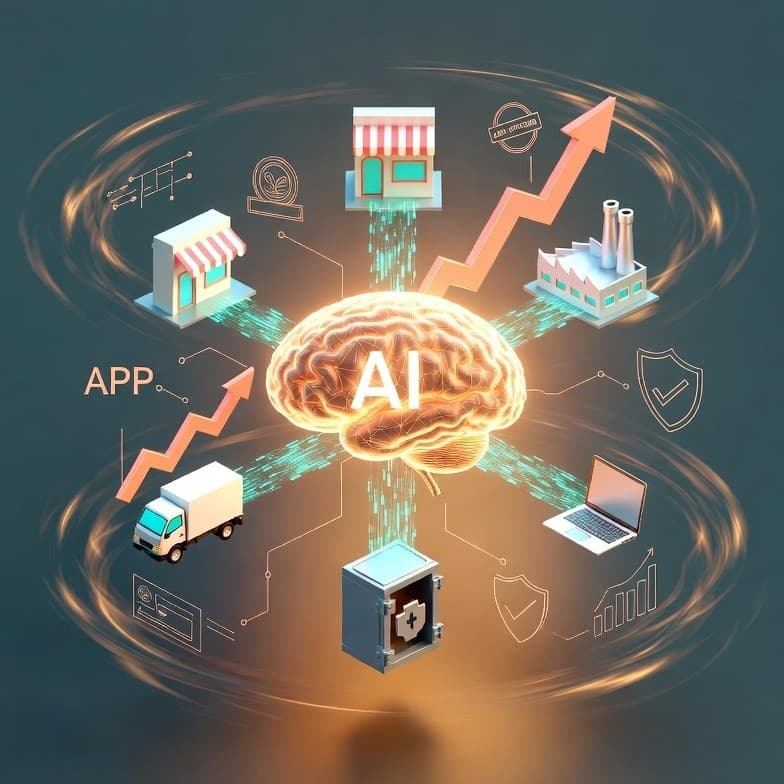
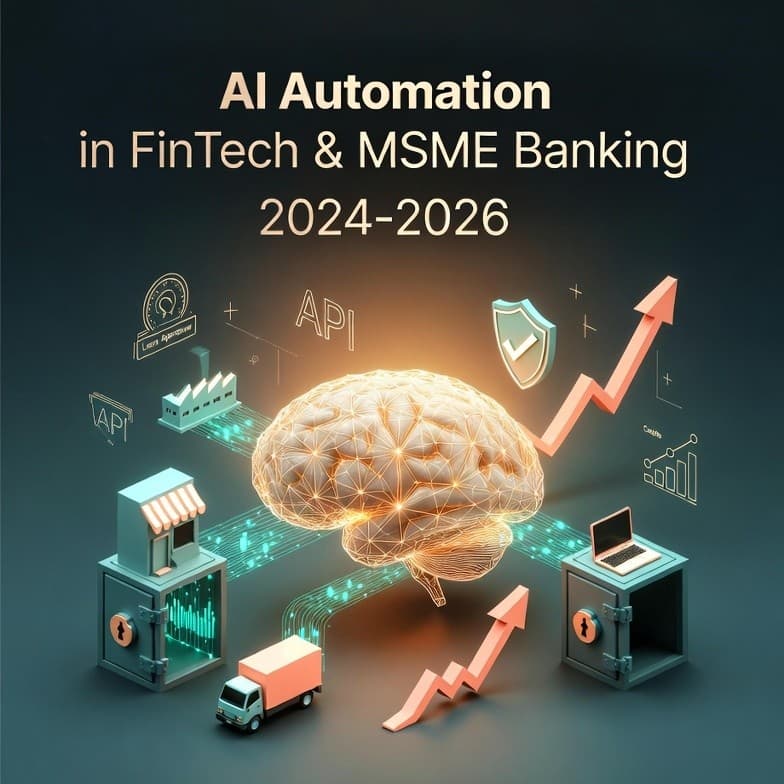
By Bitviraj Technology

AI Automation Tooling in FinTech & Banking: A Comprehensive Study for MSME Enablement (2024–2026)
Executive Summary
AI automation is rapidly reshaping banking and FinTech services for MSMEs (Micro, Small & Medium Enterprises). Globally, financial institutions are deploying AI to solve structural problems such as credit access gaps, slow underwriting, compliance burdens, and fraud—particularly in MSME lending where traditional risk models fail due to limited formal financial history.
Industry research forecasts strong market expansion for AI in FinTech, with projections ranging from ~$30B by 2028 (conservative estimates) to $61B+ by early 2030s (aggressive estimates), signalling sustained investments into AI-led financial automation.
For MSME banking specifically, AI is driving measurable outcomes:
Loan approvals
weeks → minutes
Cost reduction
40–60% operational
Fraud detection
faster, fewer false positives
Default rates
lower through data-rich underwriting
This article examines the market landscape, live implementations, architectural frameworks, adoption trends, challenges, ROI, and practical recommendations to deploy AI automation at scale.
Market Overview: AI in FinTech and MSME Banking
Global Market Landscape
AI adoption in FinTech is now a core strategy—not a pilot trend. Multiple industry trackers estimate rapid growth across AI-driven automation in banking and financial services. Some widely cited market studies indicate:
AI in FinTech market~$9.83B (2023)
2028 projection$30.61B (~25% CAGR)
Longer-term projection$61.3B+ (early 2030s)
The practical interpretation: banks are accelerating deployment, moving AI from experimental to embedded infrastructure.
Why MSMEs Are the AI & "Sweet Spot"
MSMEs represent a massive, underserved segment with unique constraints:
Thin credit files
Irregular cash flows
Limited collateral
Heavy documentation burden
AI solves this by converting real-world business activity into machine-readable creditworthiness—especially via transaction behavior, invoice cycles, GST/tax patterns, and account cash flows.
Key Market Drivers
Driver A: MSME Credit Gap + Informality
MSMEs globally remain underbanked because legacy credit models prioritize formal data and collateral. This creates a persistent credit gap—driving demand for automated lending tools powered by alternative data.
Driver B: High Operational Costs in MSME Lending
MSME lending is expensive to service due to:
- Manual underwriting
- Repetitive compliance reviews
- High-touch KYC/AML processes
AI automation reduces underwriting, onboarding, and support costs through straight-through processing.
Driver C: NPA / Default Reduction
AI improves early warning systems and risk scoring by:
- Monitoring cash flow anomalies
- Detecting repayment stress earlier
- Revising credit limits dynamically
Live Projects & Proof-of-Concepts (Global)
Below are some high-signal real implementations that demonstrate AI automation delivering real operational outcomes.
AI Credit Assessment & Underwriting
Kabbage (US, acquired by American Express)
Kabbage became one of the most referenced examples in automated small-business lending—using machine learning models to analyze business signals from bank transactions and external sources.
Evidence of large-scale SME/PPP lending volumes:
Reuters reported Kabbage made nearly 300,000 PPP loans worth ~$7B in 2020
Kabbage's model helped establish the modern template for AI-first MSME underwriting: fast credit decisioning based on behavior + cash flow, not just collateral.
Fraud Detection + Compliance Automation
JPMorgan Chase – COiN (Contract Intelligence)
JPMorgan's COiN is a landmark example of automation in banking operations:
COiN reportedly reduced contract review time drastically—often cited as saving ~360,000 hours annually and processing 12,000 credit agreements quickly
MSME relevance: COiN-style NLP automation can be applied to:
- MSME loan contracts
- collateral documents
- vendor agreements
- compliance documentation (FATCA/CRS-style checks)
Instead of compliance being a bottleneck, it becomes an automated pipeline.
AI Advisory + Cashflow Intelligence
Starling Bank (UK)
Starling has publicly rolled out AI-driven features for customer financial intelligence (built with Google Gemini) showing how neobanks are integrating GenAI for insights and guidance.
Starling's approach signals the next stage: AI is not only underwriting—AI is the interface of banking.
Architecture Framework: How AI Automation Works in FinTech
To implement AI automation for MSMEs at scale, the architecture must support:
- real-time decisioning
- explainability
- compliance-by-design
- secure integrations
Reference Architecture (Modern MSME AI Banking Stack)
A) Presentation Layer
- MSME dashboards (web/mobile)
- API gateway + partner integrations
- Chatbots / voice assistants
- Embedded finance UX inside ERP/accounting tools
B) Application Layer
- Credit scoring + underwriting service
- Fraud detection engine
- Compliance automation module
- Personalized insights & recommendations engine
C) AI/ML Processing Layer
- Model training + serving
- Feature store
- Real-time inference engine
- MLOps pipelines and monitoring
D) Data Management Layer
- Data lakehouse (structured + unstructured)
- Event streams (Kafka / Spark)
- Open Banking + Account Aggregator integrations
- Audit trails (optionally blockchain for immutable logs)
E) Security + Infrastructure
- Cloud/hybrid
- containers/orchestration
- zero trust security
- governance & regulatory modules
Recommended Tooling Stack (Implementation Ready)
Data Processing + Integration
- Kafka / Spark streaming pipelines
- Snowflake / Redshift / BigQuery warehouse
- Plaid/Yodlee (global aggregation); India AA ecosystem (for India)
ML + MLOps
- TensorFlow / PyTorch
- scikit-learn for traditional ML
- Hugging Face for document intelligence + NLP
- Vertex AI / SageMaker for MLOps
Security + Compliance
- Explainability: SHAP / LIME
- Privacy: federated learning, privacy-preserving analytics
- Immutable logs: blockchain audit rails (optional)
Global Adoption Patterns
North America
Mature Adoption
- AI penetration high across large banks
- Focus: fraud, underwriting automation, CX personalization
Europe
Regulated Scale-up
Europe's adoption is shaped by GDPR and PSD2/Open Banking.
- Strong demand for explainable, auditable AI models
Asia-Pacific
Fastest Growth
Accelerating due to:
- massive MSME base
- mobile-first users
- national digital public infrastructure
- embedded finance wave
LatAm + Africa
Leapfrogging Markets
Bypass legacy systems by adopting:
- alternative data underwriting
- mobile-first onboarding
- lightweight digital compliance
Example: Bank of England survey work shows broad AI usage across UK financial services, reflecting how mainstream AI adoption has become across the sector.
Implementation Challenges (and Practical Fixes)
Challenge 1: Data Quality + Availability
Solution:
Alternative data sources. Examples include utility payments, transaction behavior, accounting + invoice trails.
Challenge 2: Model Interpretability
Regulators and risk teams demand explainability.
Solution:
Explainable AI + model governance pipelines.
Challenge 3: Integration Complexity
Banks have legacy infrastructure.
Solution:
API-first microservices, event-driven architecture, modular rollout.
Challenge 4: Bias + Fairness
AI can unintentionally discriminate.
Solution:
bias audits, diverse training datasets, fairness monitoring.
ROI & Business Impact (MSME-Specific)
Quantitative Gains
Across case studies, AI automation typically delivers:
MSME acquisition/service cost40–70% reduction
Manual processing time60–80% reduction
Cross-sell conversions25–35% improvement
Default reduction30–50% (better monitoring + risk scoring)
Qualitative Gains
- improved MSME experience (fast approvals, fewer documents)
- enhanced financial inclusion
- competitive differentiation
- improved portfolio resilience
Future Trends (2024–2026)
GenAI as the MSME Banking Interface
Expect ChatGPT-like assistants embedded in business banking that can:
- explain cash flow
- summarize statements
- suggest credit options
- help with compliance tasks
Embedded Finance + AI Lending
MSME lending will increasingly happen inside:
- accounting tools
- procurement systems
- ERP software
- ecommerce seller dashboards
Federated Learning + Privacy-First Models
Banks will collaborate without sharing raw data, improving:
- fraud intelligence
- risk scoring performance
- ecosystem-level detection
Strategic Recommendations
For Financial Institutions
- Start with pilots in credit scoring + fraud (highest ROI)
- Invest in data foundation before models
- Adopt explainable AI + governance from day 1
- Partner with FinTechs to accelerate specialized modules
For FinTech Startups
- Focus on niche MSME verticals (retail, logistics, exporters)
- Build API-first plug-and-play modules for banks
- Prioritize transparency and compliance readiness
- Expand into emerging markets with DPI readiness
For Regulators
- Build regulatory sandboxes
- Define responsible AI guidelines
- Promote interoperability standards
- Support digital rails (identity, payments, consent-based data)
Conclusion
AI automation in FinTech is no longer optional—it is becoming banking's operating system, especially for MSME segments.
Proven global deployments show that AI can:
- expand credit access
- reduce fraud and NPA risk
- cut operational costs
- dramatically improve MSME customer experience
The next phase will be driven by:
- GenAI-based interfaces
- embedded finance
- privacy-preserving intelligence
- shift from bank-led distribution to platform-led credit delivery
The time to deploy AI automation for MSMEs is now—not as an experiment, but as core infrastructure.
Case Studies
Empowering Digital
Evolution



Blogs
Empowering Digital
Evolution
BitViraj Technologies - Your Gateway to
Tomorrow's Innovations



Embark on a DigitalJourney


The next-generation digital technology company Bitviraj has the potential to empower and reinvent business in the current fast-paced market.


Our Service
- Website Development
- Application Development
- Blockchain Development
- Gaming and Metaverse