

BitViraj Technologies - Your Gateway to
Tomorrow's Innovations
Identity Security and Passwordless Authentication: Securing the New Security Perimeter
For decades, cybersecurity strategies revolved around protecting the network perimeter. Firewalls, VPNs, intrusion detection systems, and endpoint security tools formed the foundation of enterprise defense. The assumption was simple: if organizations could keep attackers out of their networks, their critical assets would remain secure.

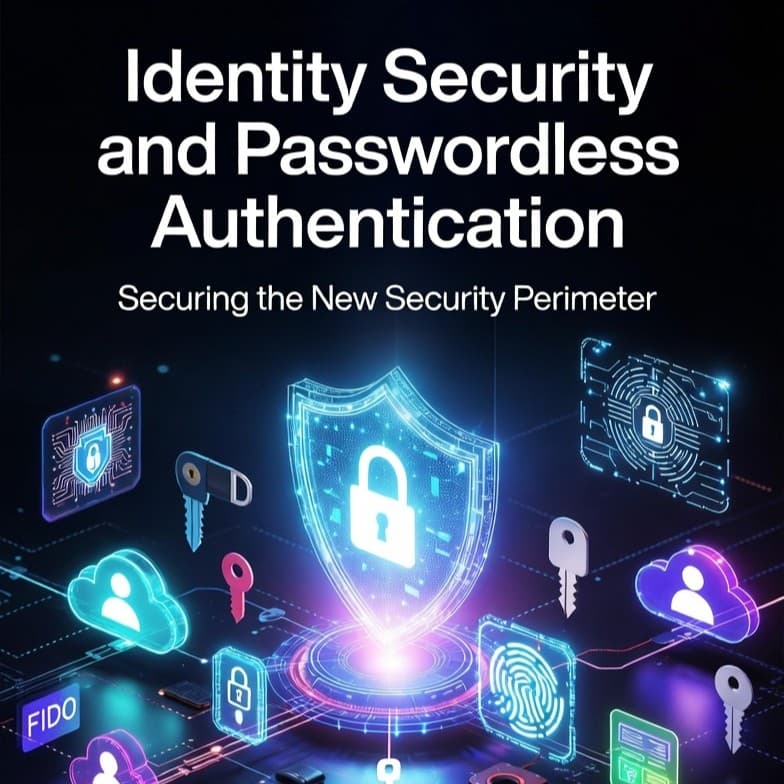
Identity Security and Passwordless Authentication
Securing the New Security Perimeter
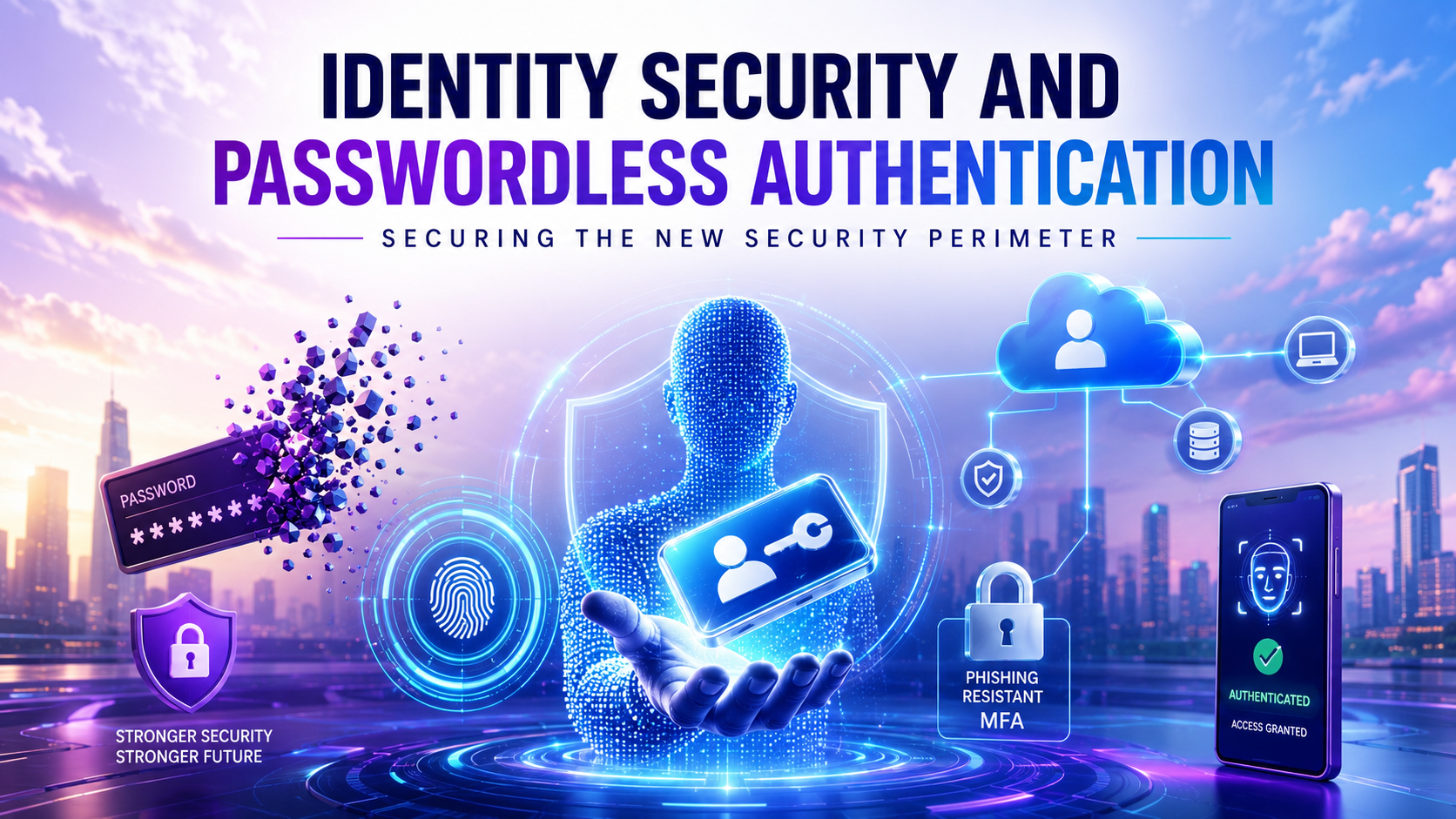
Introduction
For decades, cybersecurity strategies revolved around protecting the network perimeter. Firewalls, VPNs, intrusion detection systems, and endpoint security tools formed the foundation of enterprise defense. The assumption was simple: if organizations could keep attackers out of their networks, their critical assets would remain secure.
That assumption no longer holds true.
The modern workplace is distributed across cloud platforms, remote devices, SaaS applications, and hybrid environments. Employees access business resources from anywhere, often using multiple devices and identities throughout the day. As a result, the traditional network boundary has become increasingly blurred.
Today, identity has emerged as the new security perimeter.
Rather than attacking networks directly, cybercriminals are targeting user accounts, authentication systems, cloud identities, and privileged access mechanisms. A compromised identity can often provide attackers with the same level of access as a successful network breach—sometimes even more.
This shift has accelerated the adoption of passwordless authentication, phishing-resistant multi-factor authentication (MFA), passkeys, and advanced identity security frameworks. At the same time, digital forensics teams are facing new challenges as they investigate identity-based attacks that leave few traditional indicators behind.
In this article, we explore the rise of identity-centric security, the growing adoption of passwordless technologies, and the critical role of digital forensics in investigating identity compromises.
Why Identity Has Become the Primary Security Perimeter
The way organizations operate has fundamentally changed.
Business applications now reside in:
- Cloud environments
- SaaS platforms
- Hybrid infrastructures
- Mobile devices
- Remote work environments
Users access resources through identity providers rather than traditional network gateways.
This transformation has made identity systems a prime target for attackers.
Instead of attempting to breach heavily defended networks, threat actors increasingly focus on:
- Stolen credentials
- Session hijacking
- Token theft
- OAuth abuse
- MFA bypass techniques
- Privileged account compromise
If attackers successfully compromise an identity, they can often move through cloud environments without triggering traditional security controls.
"Identity is the new perimeter."
The Growing Problem with Passwords
Passwords have been the cornerstone of authentication for decades, but they continue to represent one of cybersecurity's weakest links.
Organizations face numerous password-related challenges:
Weak Password Selection
Many users still create predictable passwords that are vulnerable to brute-force attacks.
Password Reuse
Employees frequently reuse passwords across multiple services, increasing exposure when a single account is compromised.
Credential Theft
Attackers regularly obtain passwords through phishing campaigns, malware infections, data breaches, and credential stuffing attacks.
User Fatigue
As the number of online accounts grows, managing passwords becomes increasingly difficult.
Even organizations that enforce strong password policies often struggle to eliminate these risks entirely.
The Rise of Passwordless Authentication
Passwordless authentication is rapidly becoming one of the most significant advancements in identity security.
Rather than relying on knowledge-based authentication such as passwords, passwordless systems verify users through cryptographic mechanisms, trusted devices, or biometric factors.
The objective is simple:
Remove the password from the attack surface.
By eliminating passwords, organizations reduce exposure to:
- Phishing attacks
- Password spraying
- Credential stuffing
- Brute-force attempts
- Password database theft
Understanding Passkeys
Passkeys are emerging as the future of secure authentication.
Unlike traditional passwords, passkeys rely on public-key cryptography.
When a user registers a passkey:
- A private key remains securely stored on the user's device.
- A public key is stored by the service provider.
During authentication:
- The private key verifies identity.
- The private key never leaves the device.
- No password is transmitted across the network.
This architecture makes passkeys significantly more resistant to phishing and credential theft.
Even if attackers create convincing fake login pages, they cannot capture a passkey in the same way they steal passwords.
For organizations seeking stronger authentication without increasing user friction, passkeys represent a major step forward.
Phishing-Resistant Multi-Factor Authentication
Traditional MFA significantly improves security, but not all MFA methods provide equal protection.
Many organizations still rely on:
- SMS verification codes
- Email-based OTPs
- Mobile authentication codes
While effective against many attacks, these methods can still be vulnerable to:
- Social engineering
- SIM swapping
- Adversary-in-the-middle attacks
- Session hijacking
Phishing-resistant MFA uses stronger authentication methods that cannot easily be intercepted or replayed.
Examples include:
- Hardware security keys
- Passkeys
- FIDO2 authentication
- Cryptographic challenge-response mechanisms
These technologies verify both the user and the legitimacy of the service being accessed, making phishing attacks far less effective.
The Rise of Machine Identities
Human users are no longer the only identities organizations must protect.
Modern environments contain thousands of machine identities, including:
- APIs
- Cloud workloads
- Containers
- Service accounts
- Automation tools
- CI/CD pipelines
These non-human identities often possess significant privileges.
Unfortunately, many organizations focus primarily on user accounts while overlooking machine identities.
Attackers increasingly target:
- API keys
- Service account credentials
- Cloud tokens
- Access certificates
A compromised machine identity can provide attackers with extensive access to cloud infrastructure and sensitive data.
Protecting these identities has become a critical component of modern cybersecurity programs.
Identity-Based Attacks Are Evolving
As organizations strengthen traditional defenses, attackers continue adapting their tactics.
Today's identity-focused attacks often involve:
Credential Theft
Stealing user credentials through phishing or malware.
Session Hijacking
Capturing authenticated sessions to bypass login controls.
Token Theft
Stealing authentication tokens that grant direct access to cloud resources.
Privilege Escalation
Compromising high-value accounts to gain broader access.
Cloud Identity Abuse
Manipulating cloud identity platforms to maintain persistence and evade detection.
These attacks often generate minimal malware activity, making detection significantly more difficult.
The Digital Forensics Perspective
Identity-centric attacks require a different investigative approach than traditional malware incidents.
In many cases, attackers operate using legitimate credentials and trusted services.
As a result, investigators must focus heavily on authentication activity, cloud logs, and identity provider records.
Identity Attack Investigations
When an account compromise occurs, forensic investigators seek to determine:
- How the identity was compromised
- What resources were accessed
- Whether privileges were elevated
- What actions were performed after compromise
Key evidence sources include:
- Authentication logs
- Identity provider records
- Endpoint telemetry
- Cloud activity logs
- Access management systems
Identity investigations often require correlating activity across multiple platforms to reconstruct attacker behavior.
Investigating OAuth Abuse
OAuth has become a cornerstone of modern cloud authentication.
It allows applications to access user resources without exposing passwords directly.
However, attackers increasingly abuse OAuth permissions to gain persistent access.
Common attack scenarios include:
- Malicious application consent grants
- Unauthorized OAuth tokens
- Excessive permissions
- Token abuse after phishing attacks
Because OAuth access can remain active even after password changes, these attacks can be particularly difficult to identify.
Forensic investigations focus on:
- Consent records
- Application permissions
- Token issuance events
- User authorization activity
Understanding OAuth behavior is now a critical skill for cloud-focused investigators.
MFA Bypass Analysis
While MFA remains an essential security control, attackers continuously develop methods to circumvent it.
Investigators frequently analyze incidents involving:
MFA Fatigue Attacks
Repeated authentication requests designed to pressure users into approving access.
Session Token Theft
Stealing authenticated sessions after successful MFA verification.
Adversary-in-the-Middle Attacks
Intercepting authentication flows to capture session credentials.
Social Engineering
Manipulating help desks or users into bypassing security procedures.
Forensic analysis helps identify how MFA protections were circumvented and whether additional accounts may be at risk.
Cloud Identity Compromise Reconstruction
Cloud environments introduce unique forensic challenges.
Unlike traditional endpoints, evidence often exists across multiple cloud services and identity platforms.
Investigators reconstruct cloud identity compromises by analyzing:
- Login activity
- API interactions
- Privilege changes
- Token creation events
- Resource access patterns
- Geographic anomalies
The objective is to create a comprehensive timeline showing:
- Initial compromise
- Persistence mechanisms
- Privilege escalation
- Data access activity
- Lateral movement across cloud resources
This reconstruction provides organizations with the visibility needed to contain threats and prevent future incidents.
Best Practices for Strengthening Identity Security
Organizations can significantly reduce risk by adopting modern identity security strategies.
Implement Passwordless Authentication
Reduce dependence on passwords and eliminate common credential attack vectors.
Deploy Phishing-Resistant MFA
Move beyond SMS-based authentication toward stronger cryptographic methods.
Monitor OAuth Permissions
Review application consent and excessive access privileges regularly.
Secure Machine Identities
Protect service accounts, API keys, certificates, and cloud workloads.
Apply Least Privilege Principles
Limit access rights to only what users and systems require.
Continuously Monitor Authentication Activity
Detect unusual login patterns, impossible travel events, and privilege changes.
Conduct Regular Identity Security Assessments
Evaluate authentication controls, access management policies, and cloud identity configurations.
Conclusion
As organizations continue their digital transformation journeys, identity has become the most valuable target for cybercriminals and the most critical component of modern security strategies. The shift from traditional network-centric security to identity-centric defense reflects the reality of today's cloud-first, remote-enabled business environment.
Passwordless authentication, passkeys, phishing-resistant MFA, and machine identity protection are no longer emerging concepts—they are rapidly becoming foundational security requirements.
At the same time, digital forensics teams must adapt to a new generation of identity-based threats. Investigating OAuth abuse, MFA bypass techniques, cloud identity compromises, and credential-based attacks requires specialized expertise and a deep understanding of modern authentication systems.
Organizations that invest in strong identity security today will be better positioned to defend against tomorrow's threats. In a world where access is everything, protecting identity means protecting the business itself.
About Bitviraj Technology
Bitviraj Technology helps organizations navigate today's evolving cybersecurity landscape through advanced digital forensics, cloud security assessments, identity security consulting, incident response, and threat intelligence services. Our mission is to help businesses strengthen security, improve resilience, and stay ahead of modern cyber threats in an increasingly identity-driven world.
Case Studies
Empowering Digital
Evolution



Blogs
Empowering Digital
Evolution
BitViraj Technologies - Your Gateway to
Tomorrow's Innovations




Embark on a DigitalJourney


The next-generation digital technology company Bitviraj has the potential to empower and reinvent business in the current fast-paced market.


Our Service
- Website Development
- Application Development
- Blockchain Development
- Gaming and Metaverse