

BitViraj Technologies - Your Gateway to
Tomorrow's Innovations
AI Memory Networks: Teaching Machines to Remember Like Humans
One of the most common frustrations people experience when interacting with artificial intelligence is surprisingly simple: The AI forgets. You might spend twenty minutes explaining a project, sharing preferences, discussing goals, and building context. Then, in a new conversation or after enough messages, the AI behaves as if it has never met you before.

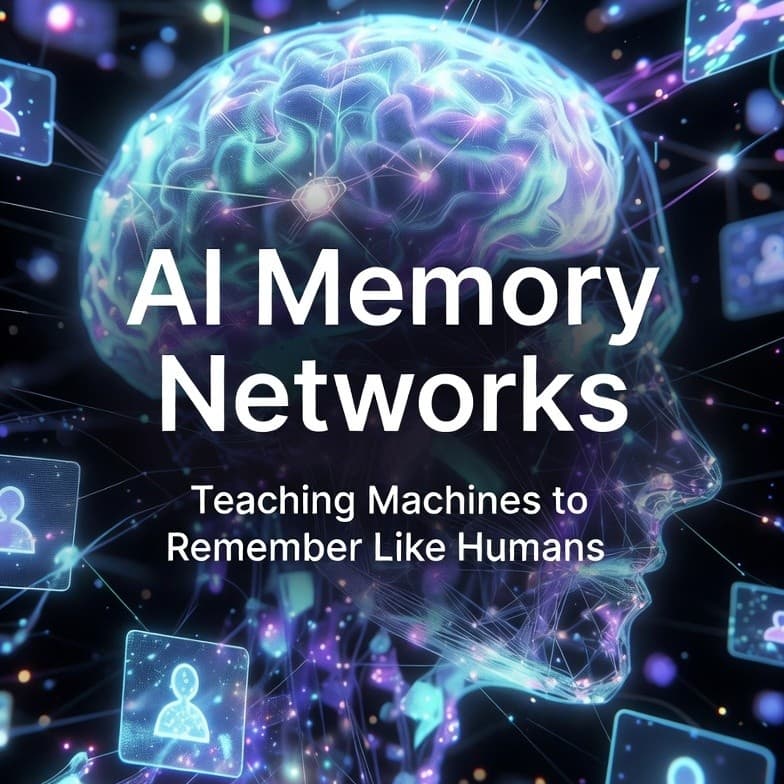
AI Memory Networks
Teaching Machines to Remember Like Humans
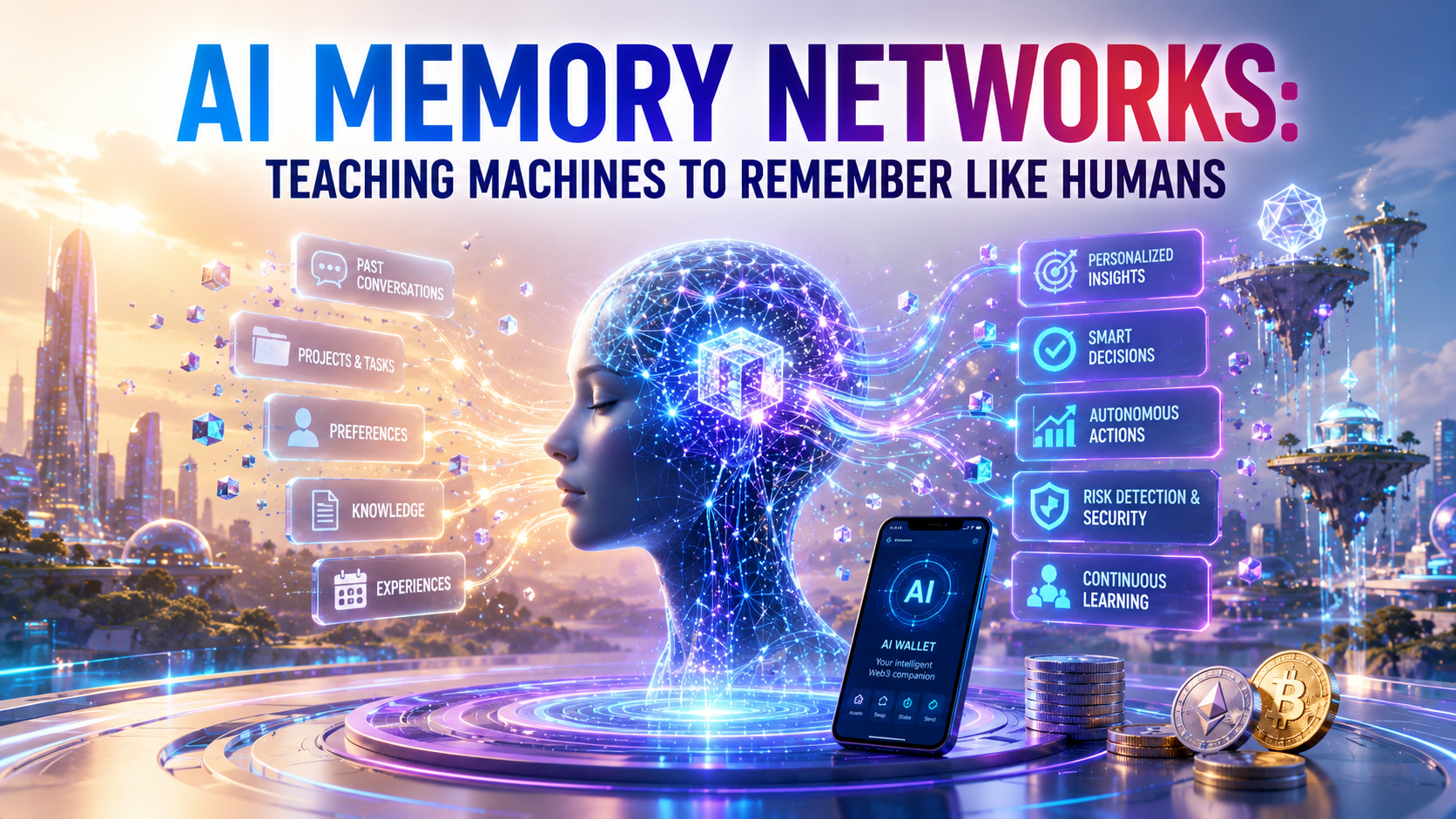
Introduction
One of the most common frustrations people experience when interacting with artificial intelligence is surprisingly simple:
The AI forgets.
You might spend twenty minutes explaining a project, sharing preferences, discussing goals, and building context. Then, in a new conversation or after enough messages, the AI behaves as if it has never met you before.
While modern AI systems have become remarkably capable at understanding language, generating content, writing code, and solving problems, they still struggle with something humans do naturally every day:
Remembering.
Human intelligence is not defined solely by our ability to process information. It is equally shaped by our ability to store experiences, recall knowledge, learn from past interactions, and build context over time.
This realization is driving one of the most important developments in artificial intelligence today—the rise of AI Memory Networks.
These systems aim to give AI something it has historically lacked: a persistent and evolving memory.
And if successful, they could fundamentally change how humans interact with intelligent machines.
Why Memory Matters More Than Intelligence
When people think about AI advancement, they often focus on model size, reasoning capabilities, or computational power.
But intelligence without memory has limitations.
Imagine meeting a colleague every morning who forgets every conversation you've ever had.
No matter how smart they are, working with them would quickly become frustrating.
The same challenge exists with artificial intelligence.
Without memory, AI systems must repeatedly relearn information that users have already shared.
- Every conversation begins from scratch.
- Every project requires re-explaining context.
- Every interaction becomes disconnected from previous experiences.
Human relationships and productivity rely heavily on continuity.
Future AI systems will require the same capability.
What Are AI Memory Networks?
AI Memory Networks are systems designed to store, organize, retrieve, and update information across interactions.
Rather than treating every conversation as an isolated event, memory networks allow AI to build a structured understanding of users, tasks, environments, and experiences over time.
Think of memory networks as a digital brain's long-term storage system.
They help AI answer questions such as:
- What has this user told me before?
- What projects are they working on?
- What preferences have they expressed?
- What decisions have been made previously?
- What information is most relevant right now?
The goal is not simply storing data.
The goal is creating context.
And context is what transforms a useful tool into an intelligent assistant.
Human Memory as Inspiration
Interestingly, researchers are increasingly looking toward human cognition for inspiration.
Human memory is not a single storage system.
We use different types of memory for different purposes.
Short-Term Memory
Used for immediate tasks and active conversations.
Long-Term Memory
Stores knowledge, experiences, and learned information over time.
Episodic Memory
Remembers specific events and experiences.
Semantic Memory
Stores facts, concepts, and general knowledge.
Future AI memory networks may adopt similar structures.
Instead of storing everything equally, they will learn what information matters, what should be forgotten, and what should be prioritized.
This is remarkably similar to how humans remember.
Why AI Assistants Need Memory
The next generation of AI assistants will not simply answer questions.
They will help manage projects, coordinate tasks, support decision-making, and collaborate with users over months or years.
Consider a business owner working with an AI assistant.
The assistant should ideally remember:
- Company objectives
- Brand guidelines
- Previous marketing campaigns
- Customer preferences
- Team structures
- Product information
Without memory, this knowledge must be repeated constantly.
With memory, the AI becomes increasingly valuable over time.
Every interaction improves its understanding.
Every project adds context.
Every decision contributes to future performance.
The Rise of Personalized AI
One of the most exciting outcomes of memory networks is personalization.
Today's AI systems often feel generic because they treat users similarly.
Memory changes that dynamic.
Future AI assistants may develop a deep understanding of individual users.
They could remember:
- Communication styles
- Professional goals
- Learning preferences
- Interests and hobbies
- Frequently used tools
- Long-term projects
As a result, interactions become more relevant and efficient.
The AI evolves from a general-purpose assistant into a personalized digital companion.
Memory Networks and AI Agents
The importance of memory becomes even greater when discussing AI agents.
Autonomous agents are designed to complete tasks independently.
To do this effectively, they must understand history and context.
Imagine an AI project manager.
It needs to remember:
- Project timelines
- Team assignments
- Past discussions
- Previous decisions
- Ongoing challenges
Without memory, autonomous decision-making becomes unreliable.
Memory networks provide the continuity necessary for long-term planning and execution.
This is one reason many experts believe memory will become a foundational component of future AI agents.
Enterprise Applications
Businesses are already exploring how memory-enhanced AI can improve operations.
Customer Support
AI systems remember customer histories and previous interactions.
Knowledge Management
Organizations create institutional memory accessible through AI.
Project Management
Agents track long-term initiatives and organizational goals.
Sales and Marketing
AI remembers customer preferences and engagement history.
Employee Productivity
Assistants maintain context across meetings, documents, and workflows.
For enterprises, memory may become one of the most valuable AI capabilities because it directly impacts efficiency and continuity.
Challenges of AI Memory
While the concept is powerful, building memory systems introduces significant challenges.
Privacy
Users must maintain control over what information is stored and how it is used.
Accuracy
Memory systems must avoid storing incorrect or outdated information.
Relevance
Not everything deserves permanent storage. Determining what to remember is a complex challenge.
Security
Stored memories can contain sensitive information that requires strong protection.
Transparency
Users should understand what AI remembers and why.
As memory networks become more sophisticated, responsible design will become increasingly important.
Could AI Develop a Digital Memory Identity?
Looking further into the future, memory itself may become a valuable digital asset.
Imagine AI systems capable of preserving years of interactions, experiences, and knowledge.
An AI assistant that has worked with someone for a decade would possess an extraordinary understanding of that person's preferences, goals, and professional history.
In many ways, memory creates identity.
The more an AI remembers, the more unique it becomes.
This raises fascinating questions about ownership, portability, and control of AI memories.
- Who owns the memory?
- Can it be transferred?
- Can it be inherited?
These questions may shape future discussions around AI governance and digital identity.
Why Memory Networks Could Be the Next Major AI Breakthrough
The history of AI has largely focused on making machines smarter.
The next chapter may focus on making them more aware of context.
Reasoning is important.
Language understanding is important.
Autonomy is important.
But memory connects all of these capabilities together.
Without memory, AI remains transactional.
With memory, AI becomes relational.
That distinction could define the future of human-machine interaction.
Final Thoughts
Artificial intelligence has made extraordinary progress in recent years.
Yet one of its most important limitations remains surprisingly human: forgetting.
AI Memory Networks aim to solve this challenge by enabling machines to retain context, learn from experience, and build meaningful continuity over time.
As these systems mature, AI assistants will become more personalized, AI agents will become more autonomous, and businesses will unlock entirely new levels of efficiency and intelligence.
The future of AI is not just about generating better answers.
It is about remembering the questions, the conversations, the experiences, and the people behind them.
Because true intelligence is not only about thinking.
It is also about remembering.
At BitViraj Technology, we believe AI Memory Networks represent one of the most important frontiers in artificial intelligence. As AI evolves from tools into long-term collaborators, memory may become the foundation that enables truly intelligent and personalized digital experiences.
Case Studies
Empowering Digital
Evolution



Blogs
Empowering Digital
Evolution
BitViraj Technologies - Your Gateway to
Tomorrow's Innovations


Embark on a DigitalJourney


The next-generation digital technology company Bitviraj has the potential to empower and reinvent business in the current fast-paced market.


Our Service
- Website Development
- Application Development
- Blockchain Development
- Gaming and Metaverse