

BitViraj Technologies - Your Gateway to
Tomorrow's Innovations
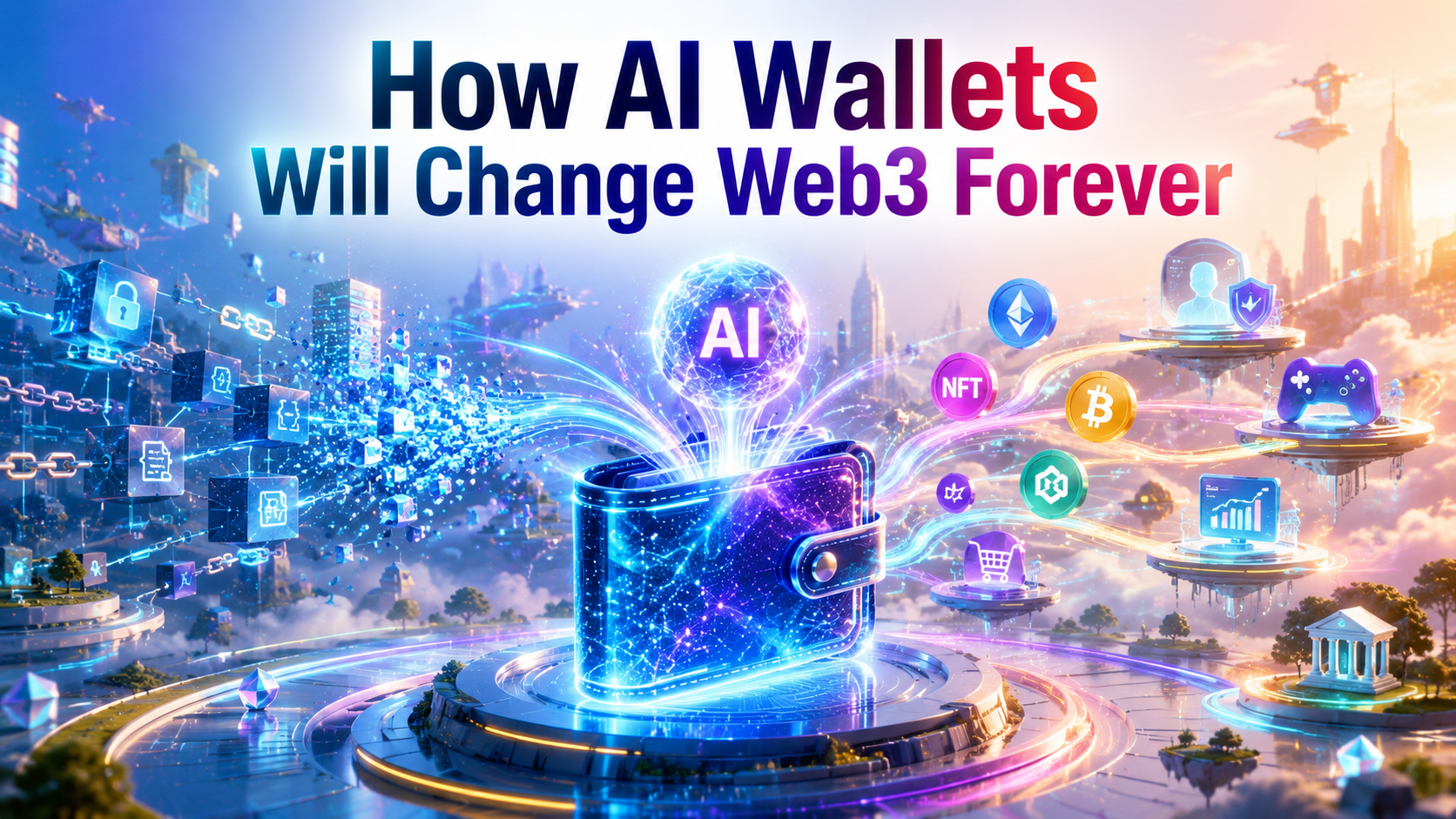
How AI Wallets Will Change Web3 Forever
For years, Web3 has promised a future where individuals have complete control over their digital assets, identities, and online interactions. Yet despite the innovation, one challenge has remained constant: complexity. Managing wallets, signing transactions, bridging assets, interacting with decentralized applications, and understanding blockchain networks often feels overwhelming for the average user. While Web3 enthusiasts have adapted to these challenges, mass adoption has remained elusive.
How AI Wallets Will Change Web3 Forever
By BitViraj Technology
Introduction
For years, Web3 has promised a future where individuals have complete control over their digital assets, identities, and online interactions. Yet despite the innovation, one challenge has remained constant: complexity.
Managing wallets, signing transactions, bridging assets, interacting with decentralized applications, and understanding blockchain networks often feels overwhelming for the average user. While Web3 enthusiasts have adapted to these challenges, mass adoption has remained elusive.
Now, a new technological shift is emerging at the intersection of artificial intelligence and blockchain.
It's called the AI Wallet.
At first glance, an AI wallet may seem like just another feature upgrade. In reality, it could become one of the most transformative innovations in the history of Web3.
Just as smartphones made the internet accessible to billions, AI wallets may become the technology that finally makes Web3 usable for everyone.
The Problem with Web3 Today
Web3 was designed to remove intermediaries and give users direct control over their digital assets. While this principle is powerful, it has also introduced significant complexity.
Consider what happens when a new user enters the crypto ecosystem:
They must:
- Create a wallet
- Secure a recovery phrase
- Understand gas fees
- Choose the correct blockchain network
- Verify smart contracts
- Avoid scams and phishing attacks
- Navigate decentralized applications
For experienced users, these tasks are manageable.
For the average person, they can be intimidating.
The reality is that Web3 still requires users to think like blockchain experts.
This is where AI wallets enter the picture.
What Is an AI Wallet?
An AI wallet is more than a place to store digital assets.
It acts as an intelligent assistant capable of understanding user intentions and executing blockchain actions on their behalf.
Instead of manually performing every transaction, users simply communicate their goals.
"Swap my tokens for the best available rate."
"Find a safe staking opportunity with moderate risk."
"Pay my monthly subscription using stablecoins."
The AI wallet handles the technical processes behind the scenes.
The user focuses on outcomes rather than blockchain mechanics.
This shift may fundamentally change how people interact with decentralized technologies.
From Wallets to Digital Financial Assistants
Traditional crypto wallets are passive tools.
They wait for users to make decisions.
AI wallets introduce something entirely different: intelligence.
They can analyze markets, monitor transactions, compare opportunities, identify risks, and automate financial actions.
In many ways, an AI wallet resembles a personal financial advisor that operates continuously.
It can:
- Monitor portfolio performance
- Optimize asset allocations
- Identify suspicious transactions
- Recommend opportunities
- Manage recurring payments
- Execute predefined strategies
Instead of simply storing assets, the wallet becomes an active participant in financial decision-making.
The Rise of Autonomous Transactions
One of the most exciting developments is the emergence of autonomous transactions.
Today, every blockchain action requires human approval.
In the future, users may grant AI wallets limited permissions to act within predefined rules.
For example:
A freelancer could authorize an AI wallet to automatically:
- Convert incoming payments into stablecoins
- Allocate a percentage to savings
- Pay recurring expenses
- Invest surplus funds according to risk preferences
All without manual intervention.
The result is a financial system that operates continuously on behalf of the user.
Making Web3 Accessible to Everyone
Perhaps the biggest impact of AI wallets will be accessibility.
Most internet users don't understand TCP/IP protocols, DNS systems, or cloud infrastructure.
They don't need to.
Technology succeeds when complexity becomes invisible.
AI wallets have the potential to do the same for blockchain.
Instead of asking users to learn:
- Smart contracts
- Liquidity pools
- Cross-chain bridges
- Transaction routing
AI wallets can abstract these processes into simple conversations.
Users communicate in natural language.
The AI handles the rest.
This could remove one of the largest barriers to mainstream Web3 adoption.
Security Could Become Smarter
Security remains one of the greatest concerns in the blockchain ecosystem.
Every year, users lose significant amounts of digital assets due to scams, malicious contracts, and human error.
AI wallets could introduce a new layer of intelligent protection.
Future AI systems may:
- Analyze transaction risks before approval
- Detect suspicious wallet interactions
- Warn users about potential scams
- Monitor unusual account behavior
- Evaluate smart contract reputations
Rather than relying solely on user awareness, AI can act as an additional security layer.
While no system can eliminate risk entirely, intelligent monitoring could dramatically improve user safety.
The Future of AI Agents and Wallets
The conversation becomes even more interesting when AI agents enter the picture.
Imagine autonomous AI systems equipped with blockchain wallets.
These agents could:
- Purchase digital services
- Rent computing resources
- Pay for data access
- Participate in decentralized marketplaces
- Manage subscriptions
- Conduct business transactions
In this scenario, wallets are no longer controlled exclusively by humans.
They become economic tools for autonomous digital agents.
This creates the foundation for an entirely new digital economy where software can own assets, make payments, and engage in commerce.
The implications are enormous.
Challenges We Must Address
While AI wallets offer tremendous promise, they also raise important questions.
Trust
How much authority should users grant to AI systems? Finding the right balance between automation and human control will be critical.
Accountability
If an AI wallet executes an undesirable transaction, who bears responsibility? Clear governance frameworks will be necessary.
Security
AI systems themselves can become targets for manipulation and exploitation. Protecting AI-driven financial infrastructure will be a major industry priority.
Regulation
As AI begins making financial decisions, regulators around the world will need to address new legal and compliance challenges. The technology may evolve faster than existing regulatory frameworks.
Why This Matters for the Future of Web3
The history of technology shows that mass adoption occurs when user experience improves dramatically.
The internet became mainstream when browsers simplified access.
Mobile technology exploded when smartphones made computing intuitive.
Web3 faces a similar moment today.
The blockchain infrastructure already exists.
The challenge is making it accessible.
AI wallets may become the interface layer that bridges the gap between advanced blockchain technology and everyday users.
Instead of learning how Web3 works, users simply tell their AI what they want to achieve.
That is a powerful shift.
Final Thoughts
The future of Web3 is not just decentralized.
It is intelligent.
AI wallets represent the convergence of two transformative technologies: artificial intelligence and blockchain. Together, they have the potential to create a digital economy that is more accessible, efficient, secure, and autonomous than anything we've seen before.
While the technology is still evolving, the direction is becoming increasingly clear.
Tomorrow's wallets will not simply store assets.
They will think, analyze, protect, and act.
And when that happens, Web3 may finally become simple enough for everyone.
At BitViraj Technology, we believe the next wave of innovation will emerge where AI and decentralized technologies intersect. AI wallets are not just another trend—they may become the foundation of the future digital economy.
Case Studies
Empowering Digital
Evolution



Blogs
Empowering Digital
Evolution
BitViraj Technologies - Your Gateway to
Tomorrow's Innovations


Embark on a DigitalJourney


The next-generation digital technology company Bitviraj has the potential to empower and reinvent business in the current fast-paced market.


Our Service
- Website Development
- Application Development
- Blockchain Development
- Gaming and Metaverse